



Teacher Career Development: From Classroom Teacher to Education Leader
 2026.10.12
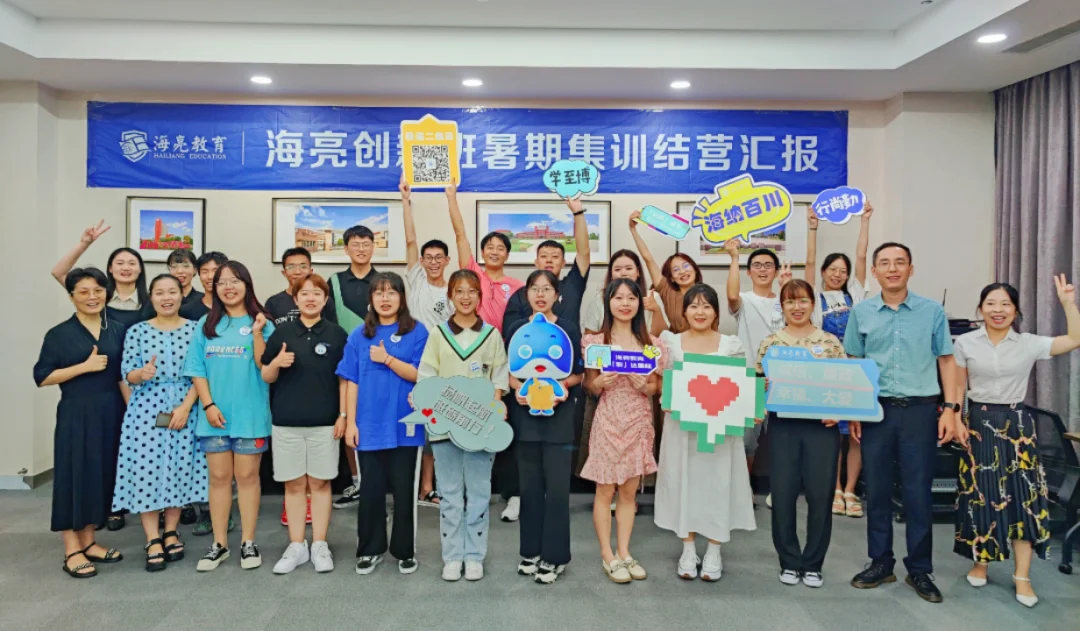
Professional development becomes more meaningful when teachers can see where their growth may lead.
For some educators, development means becoming more effective classroom teachers.
For others, it may involve mentoring younger colleagues, contributing to curriculum design, leading subject teams, or eventually taking responsibility for broader school development.
This is why teacher career development should not be understood simply as promotion.
It is a gradual expansion of professional capability and responsibility.
An educator may begin by asking:
“How can I improve my own teaching?”
Over time, that question may become:
“How can I help my colleagues improve?”
Eventually, some educators begin asking:
“How can we improve learning across the whole school?”
These stages represent different levels of professional growth.
Strong schools create opportunities for teachers to move between them naturally.
Teachers may begin by sharing successful classroom practices with colleagues. They may later participate in curriculum projects, mentor new teachers, coordinate academic initiatives, or contribute to school improvement plans.
Each experience helps educators develop abilities that extend beyond individual lessons.
In this sense, teacher professional development and teacher career development are closely connected.
Professional learning strengthens what teachers can do.
Career development expands where and how they can contribute.
Why Education Leadership Training Should Begin Before a Leadership Title
School leadership does not begin on the day someone becomes a principal.
The abilities required for leadership develop much earlier.
Teachers begin building leadership capacity when they take responsibility for a project, support a colleague, solve a shared problem, or contribute to an important school decision.
This is why effective education leadership training should not be limited to people who already hold administrative positions.
Emerging leaders need opportunities to develop:
professional judgment, communication, collaboration, curriculum understanding, decision-making, and the ability to support other educators.
Most importantly, they need to understand the relationship between leadership decisions and classroom experience.
A school leader may make decisions about curriculum, technology, professional development, assessment, or student support.
Each decision eventually affects teachers and students.
Leaders therefore need to understand education from both perspectives.
They need to see the whole school while remaining connected to what happens inside individual classrooms.
This is where strong teacher development creates an important foundation.
Teachers who have experienced continuous professional learning are often better prepared to understand why professional growth matters at an organizational level.
They know that improvement cannot simply be announced.
It has to be supported.
Teacher Leadership Creates a Stronger Professional Community
Leadership inside a school does not need to flow only from the top.
Teachers can also become important sources of professional influence.
An experienced teacher may help a new colleague solve a classroom challenge.
A subject teacher may introduce an effective instructional approach to an entire department.
A group of educators may work together to redesign part of the curriculum.
These are all forms of teacher leadership.
When schools encourage this kind of participation, professional knowledge becomes easier to share.
Instead of each teacher developing in isolation, improvement becomes collective.
This creates an important cycle.
Teachers learn from professional development.
They apply what they learn.
They share successful practices.
Other teachers adapt those ideas.
The school develops stronger professional knowledge over time.
In this way, teacher professional development becomes part of school improvement rather than an individual training activity.
AI Is Changing What Teachers Need to Learn
One of the clearest examples of why continuous professional development matters is artificial intelligence.
AI is rapidly entering education.
Teachers can now use digital and AI-supported tools for lesson preparation, feedback, learning analysis, resource development, and personalized support.
But knowing how to operate a tool is not the same as knowing how to use it educationally.
Teachers still need to make professional decisions.
When should AI be used?
When should students work independently?
How should AI-generated information be evaluated?
How can technology support creativity instead of reducing active thinking?
How can teachers protect the human relationships that remain central to education?
These questions make professional judgment more important, not less important.
Hailiang’s exploration of AI for teachers and classroom transformation reflects this shift from simply introducing technology toward considering how educators can integrate AI into everyday teaching practice.
For teacher development, the implication is significant.
Future training cannot focus only on traditional instructional methods.
Teachers increasingly need digital literacy, AI literacy, critical evaluation skills, and the ability to redesign learning activities around new technologies.
However, technology should remain a means rather than the educational goal.
The central question remains the same:
Does this help students learn better?
Professional Development Should Change Classroom Experience
Teacher development has real value only when students eventually experience the difference.
A professional development workshop may introduce an idea.
But the real impact appears later:
when a teacher redesigns a lesson;
when a student receives more useful feedback;
when different learners receive appropriate support;
or when a classroom becomes more interactive and meaningful.
This is why professional development should remain connected with practice.
Teachers need opportunities to try new approaches, observe results, reflect, and adjust.
The same principle can be seen in experiential learning beyond the classroom in China.
Experiential learning asks students to connect knowledge with authentic situations.
Teacher development follows a similar logic.
Educators also learn more deeply when professional knowledge is connected with real teaching experiences.
For both teachers and students, meaningful learning often happens through the same process:
knowledge, experience, reflection, and improvement.
Better Teacher Development Supports More Personalized Learning
Students do not all learn in the same way.
They enter classrooms with different levels of preparation, interests, goals, strengths, languages, and cultural experiences.
This creates one of the most important challenges for modern teachers.
How can a teacher maintain clear academic expectations while responding to individual differences?
There is no single technique that solves this challenge.
Teachers need a combination of subject knowledge, observation, assessment, communication, flexibility, and professional judgment.
This is another reason teacher professional development matters.
The stronger a teacher’s professional toolkit becomes, the more options they have when students need different forms of support.
Teachers can adjust explanations.
They can redesign activities.
They can use assessment information more effectively.
They can provide different levels of challenge.
They can identify when students need academic support and when they need encouragement or greater independence.
For international students, this flexibility may be particularly valuable because adapting to a new education system can involve academic, linguistic, cultural, and social changes at the same time.
Teacher Growth Also Shapes Student Life Beyond Lessons
Students experience teachers in more places than classrooms.
Teachers may serve as mentors, activity advisors, competition coaches, project supervisors, and sources of personal guidance.
As a result, teacher quality also influences the wider school experience.
HIS describes this broader environment through student life for international students studying in China, where student organizations, cultural participation, sports, collaboration, and leadership become part of the learning experience.
These activities may look different from academic lessons, but educators still play an important role.
Teachers help create environments where students can take responsibility, explore interests, work with others, and learn from experience.
Professional development therefore should not focus only on academic instruction.
Educators also need the ability to understand students as developing individuals.
Why Teacher Development Matters for Families Planning to Study in China
For international families comparing schools, teacher development may be less visible than buildings, curricula, or examination results.
But it deserves attention.
A curriculum tells families what students are expected to learn.
Teacher quality influences how that curriculum is actually experienced.
When evaluating a school, families can therefore look beyond the curriculum name and consider several broader questions.
How does the school support teachers after they are hired?
Do teachers have opportunities to collaborate?
How does the school prepare educators for technological change?
Can teachers adapt learning for students with different backgrounds and goals?
Are experienced educators given opportunities to mentor others?
Does professional development translate into classroom practice?
These questions can reveal the professional culture behind a school.
For example, HIS’s Cambridge Pathway for international students in China provides a structured academic route from early years through pre-university study, but a curriculum framework alone does not create successful learning.
Teachers ultimately interpret the curriculum, respond to students, provide feedback, and turn academic expectations into daily learning experiences.
That is why curriculum quality and teacher quality should be considered together.
From Teacher Learning to Student Growth
The relationship between teacher development and student development can be summarized simply.
When teachers learn, their professional options expand.
When their professional options expand, they can respond more effectively to students.
When schools create environments in which educators share and develop those practices, improvement can spread across the school.
This does not mean every training activity automatically improves student outcomes.
Professional development needs to be relevant, practical, sustained, and connected to real educational needs.
But the underlying principle remains important.
Schools expect students to remain curious, reflective, and willing to learn.
Strong education systems should create the same expectation for educators.
A culture of lifelong learning becomes more credible when adults model it themselves.
What the Future of Teacher Education in China May Look Like
The future of teacher education in China is likely to extend far beyond initial qualification.
Teacher development increasingly needs to connect several stages of the professional journey:
initial preparation, early-career support, classroom improvement, specialized expertise, teacher leadership, and school leadership.
Technology will add another layer.
Teachers will need to understand new tools while preserving the professional and human dimensions of education.
Internationalization will add another.
Educators working with students from different countries and cultural backgrounds will need stronger intercultural communication and adaptation skills.
Personalized education will add another.
Teachers will increasingly need to understand individual learners while still creating coherent classroom communities.
These demands make continuous development essential.
The future teacher is therefore not simply someone who has completed training.
It is someone who continues learning throughout a career.
Frequently Asked Questions
What is the difference between teacher training and teacher professional development?
A teacher training program often focuses on specific knowledge or skills, while teacher professional development is a broader and more continuous process. It may include training, mentoring, classroom reflection, collaboration, curriculum development, technology learning, and leadership growth across an educator’s career.
How does professional development help students?
Professional development can help teachers improve lesson design, assessment, feedback, classroom management, personalization, and the use of educational technology. The purpose is to translate teacher learning into stronger student learning experiences.
Why is teacher career development important?
Teacher career development gives educators opportunities to expand their expertise and responsibility over time. Teachers may develop into mentors, subject leaders, curriculum specialists, project leaders, or school leaders while continuing to strengthen classroom practice.
What role does AI play in teacher development?
AI creates new tools for planning, feedback, learning analysis, and personalized education, but teachers still need to decide when and how those tools should be used. Professional development helps educators develop both technical understanding and educational judgment.
Why should families consider teacher development when choosing where to study in China?
Students experience a school primarily through the educators who teach, support, and guide them. Understanding how a school recruits, develops, supports, and retains teachers can therefore provide families with a deeper view of educational quality.
Conclusion: Great Schools Grow Because Their Educators Grow
Educational quality is never completely finished.
Curricula evolve.
Technology changes.
Students bring new needs and expectations.
Schools therefore need educators who continue developing with them.
A strong teacher professional development system does more than provide training.
It creates a culture in which educators learn from experience, learn from one another, respond to change, and gradually take greater responsibility for student and school development.
For teachers, this creates opportunities for meaningful teacher career development.
For schools, it creates stronger professional communities and future education leaders.
For students, the benefits appear in the quality of everyday learning.
And for international families considering whether to study in China at Hailiang International School, understanding how educators grow can reveal something important about the school itself.
A school that expects students to keep learning should create the same opportunity for its teachers.
Because the future of education depends not only on what teachers already know, but on how willing and able they are to continue learning.