



AI for Teachers: How Hailiang Is Turning AI Into Better Classroom Practice
 2026.8.11
For families planning to study in China, understanding how a school uses technology can be just as important as knowing which curriculum it offers. At Hailiang, AI for teachers is increasingly being explored not simply as a way to automate routine work, but as part of a broader approach to AI in the classroom that changes lesson design, student participation, feedback and the role of the teacher.
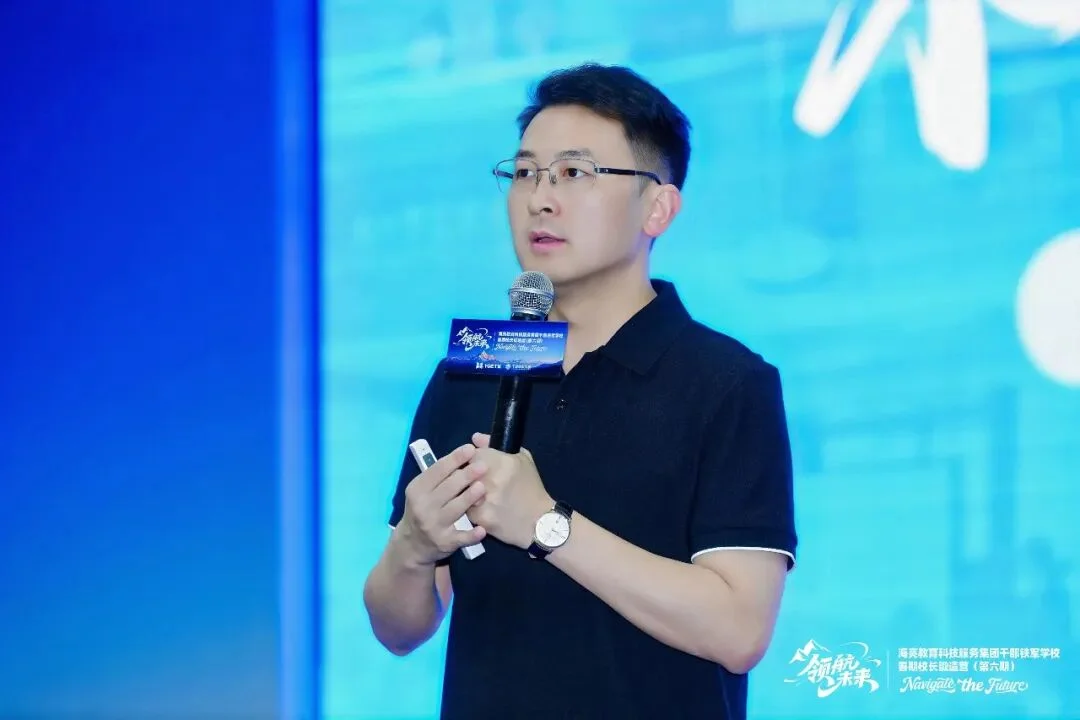
From July 16 to 20, 2026, education leaders from across China gathered at Hailiang Education Park for the sixth “Leading the Future” Summer Principal Development Camp organized through Hailiang’s education leadership development system.
The five-day program focused on two closely connected priorities: improving the quality of county-level education and translating Hailiang’s “AI Creative Thinking Classroom” from an educational concept into everyday school practice.
The central question was not simply, “What can AI do?”
It was a much more demanding question:
How should teachers and schools change when AI becomes part of learning?
Quick Answer: What Does AI Change for Teachers?
AI can support teachers with lesson preparation, learning analysis, classroom interaction, personalized feedback and post-class support. But effective AI integration requires more than introducing new software.
Teachers still need to decide what students should learn, which questions are worth exploring, how students should collaborate, when AI feedback is useful and when human judgment matters more.
This is why the future of AI in education is closely connected to teacher development.
China’s 2026 “AI + Education” Action Plan reflects this shift. It calls for AI to support teachers before, during and after lessons, while also encouraging new forms of teacher professional learning suited to the AI era.
AI Tools Do Not Automatically Create Better Teaching
The rapid growth of AI tools for teachers creates an understandable temptation: introduce the newest platform first and work out the teaching model later.
Hailiang’s principal development program approached the issue from the opposite direction.
At the beginning of the camp, senior education leaders focused first on educational strategy, school development and the purpose of AI-supported teaching.
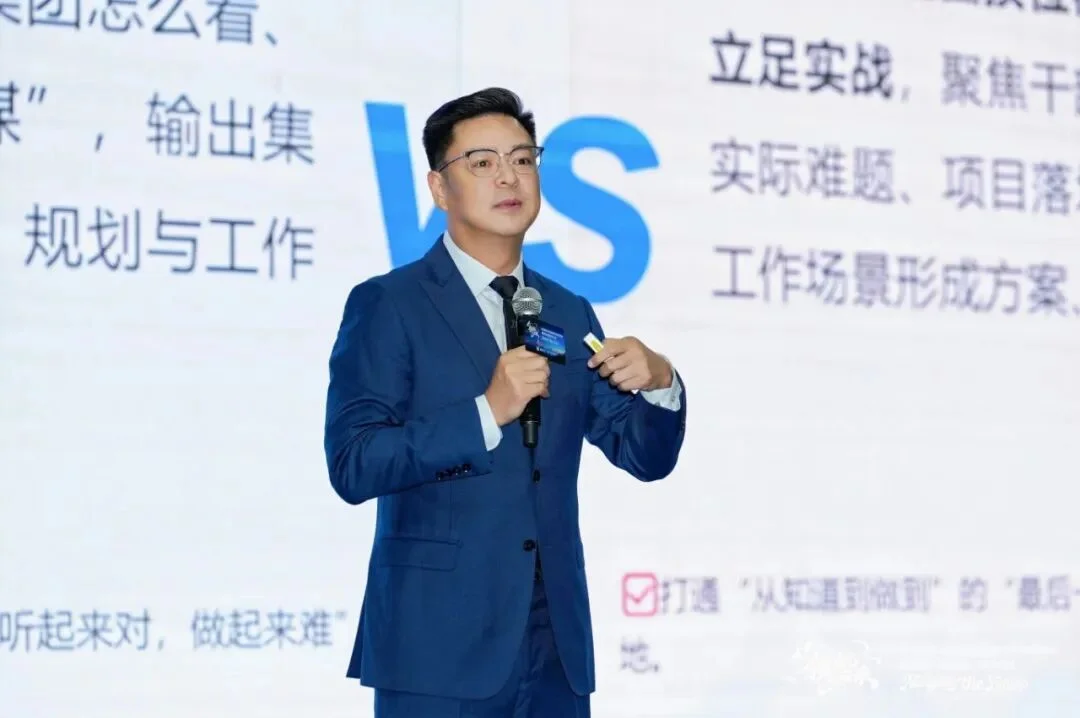
Chen Junwei, Chairman and President of Hailiang Education Technology Services Group, discussed the long-term development of county-level education and the role technology can play in making high-quality personalized education available at greater scale.
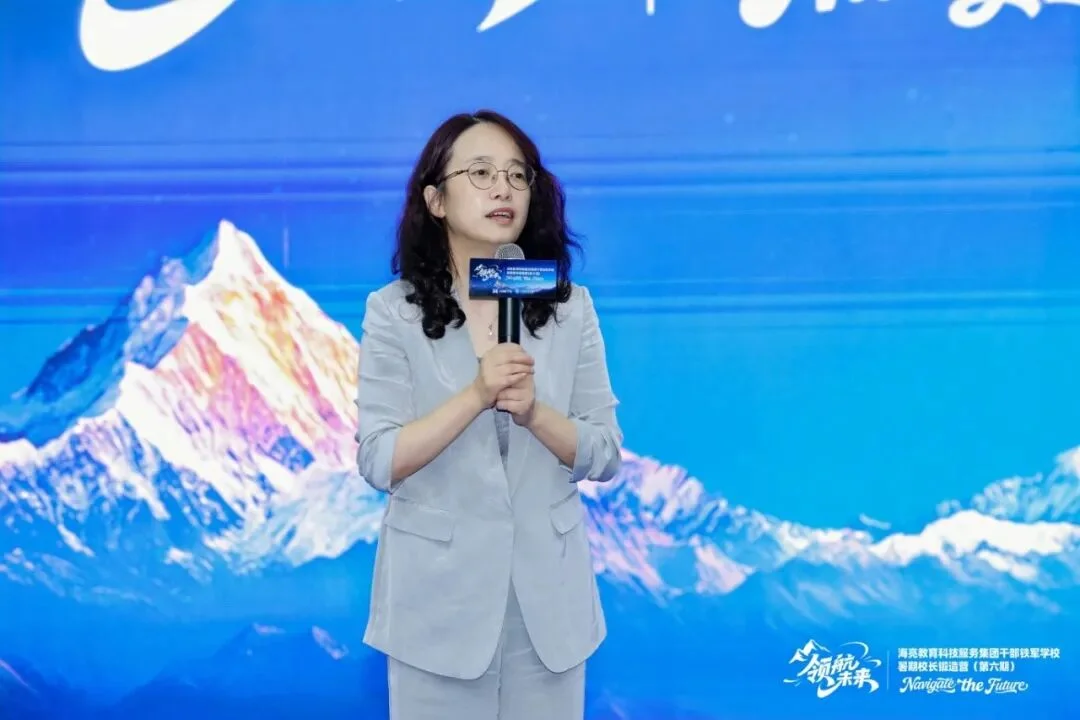
Peng Lei, Vice President of the Group, then focused specifically on the AI Creative Thinking Classroom, examining how classroom philosophy, teaching structures and practical learning scenarios need to change together.
This distinction matters.
A classroom does not become innovative because a teacher opens an AI application.
Technology becomes educationally meaningful only when it helps teachers redesign what students actually do.
From Delivering Knowledge to Designing Learning
Traditional classrooms can place much of the teacher’s attention on explaining information.
AI-supported classrooms create the possibility of moving some of that attention toward designing learning.
A teacher may increasingly need to ask:
What problem should students investigate?
What information should they discover independently?
Where should students discuss ideas with one another?
When should AI provide feedback?
What evidence will show whether students genuinely understand?
And when should the teacher intervene?
This shift was a recurring theme throughout the summer development camp.
Guo Guihong, head of Hailiang’s Master Teacher Development School, examined the implementation of the AI Creative Thinking Classroom through lesson objectives, learning tasks, classroom organization and assessment.
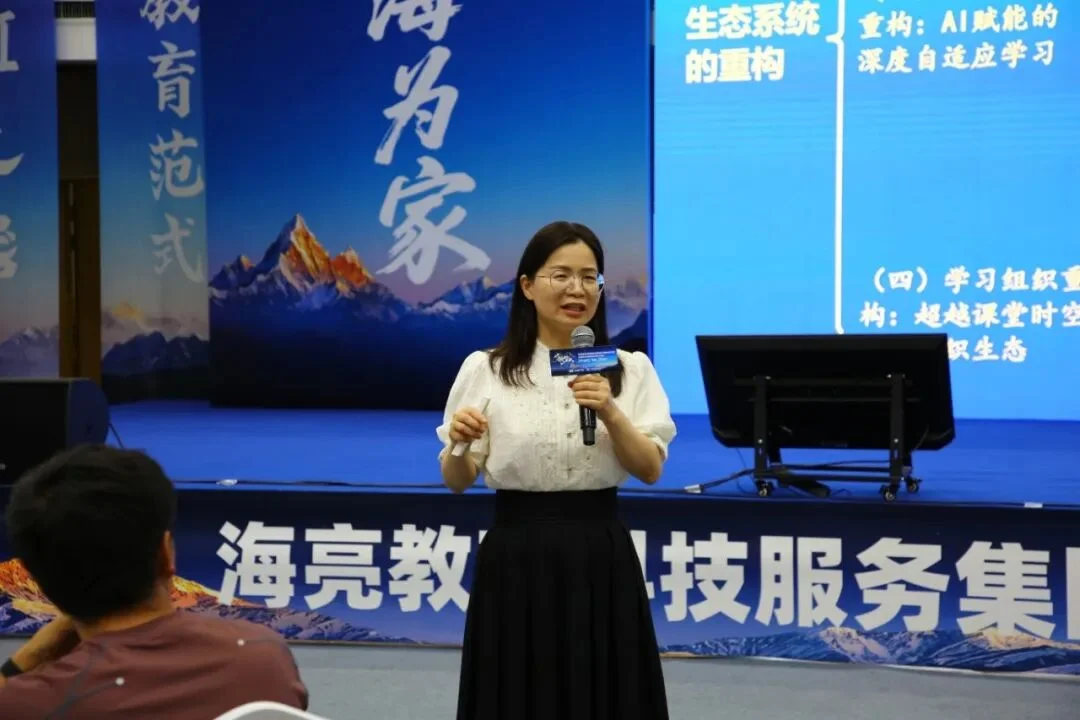
Chen Ying, Vice President of Hailiang Technology, looked more closely at how AI could enter actual teaching workflows, including lesson preparation, instruction, interaction, inquiry and student output.
Rather than treating AI as a separate technology lesson, the focus was on AI integration in education: placing technology inside an educational process with clear learning goals.
What Can AI Do Before, During and After Class?
Hailiang’s existing AI Creative Thinking Classroom model provides one example of how this can work.
Before class, digital systems can help teachers understand students’ preparation and learning needs.
During class, technology can help capture participation, responses and progress.
After class, learning data can support more targeted feedback and follow-up.
Hailiang describes this as a process connecting data collection, intelligent analysis and precise feedback across the full learning cycle. The model has been used as a regular practice in more than 100 schools since 2025.
The important point is that AI does not remove the teacher from the process.
It changes where professional judgment is most valuable.
Instead of spending nearly all classroom time transmitting information, teachers can devote more attention to observing students, asking follow-up questions, identifying misconceptions and guiding deeper thinking.
Teacher Professional Development Must Change Too
This is where teacher professional development becomes particularly important.
Schools cannot expect teachers to transform their classrooms simply by giving them access to technology.
Teachers need opportunities to see effective lessons, analyze why they work, try new approaches, receive feedback and revise their own practice.
The principal development camp therefore combined several forms of learning.
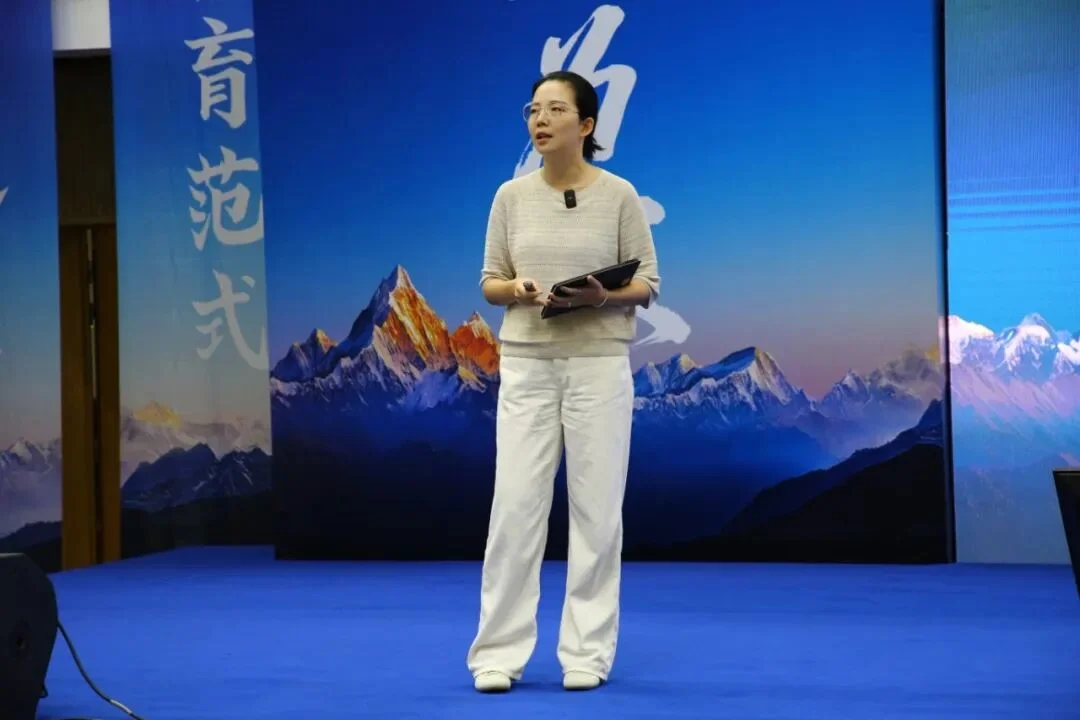
Participants first examined the strategic rationale behind AI-supported education. They then studied classroom methods, observed school practices, analyzed recorded lessons and worked with experts to understand the design decisions behind those lessons.
The process moved from theory to observation and finally to implementation.
That sequence matters because teachers and school leaders need more than examples of what an AI-enhanced lesson looks like.
They need to understand why it was designed that way.
Learning From Real Classrooms
The program included practical examples from Hailiang Experimental High School, Hailiang Art High School, Hailiang Junior High School and other schools within the wider Hailiang education network.
School leaders discussed classroom design, teacher development, technology use, student growth and implementation challenges.
Participants then studied two AI Creative Thinking Classroom lessons in greater detail.
Instead of evaluating only whether the lesson appeared engaging, they examined its internal structure:
How was the learning objective defined?
What tasks were students given?
At what point did AI enter the learning process?
How did students interact?
What feedback did they receive?
What remained the responsibility of the teacher?
This type of lesson analysis turns professional development from inspiration into transferable practice.
HIS itself has also participated in this wider process. In April 2026, the HIS curriculum reform team joined an AI Creative Thinking Classroom exchange, observed multidisciplinary demonstration lessons and discussed directions for classroom reform.
AI Training for Teachers Should Include Judgment, Not Just Skills
Good AI training for teachers should not focus only on which buttons to click.
Teachers also need professional judgment about appropriate use.
For example, AI may help generate a lesson outline quickly. But the teacher must still decide whether that outline is suitable for the students in front of them.
AI may analyze student responses. But a teacher still needs to determine whether the data reflects genuine understanding.
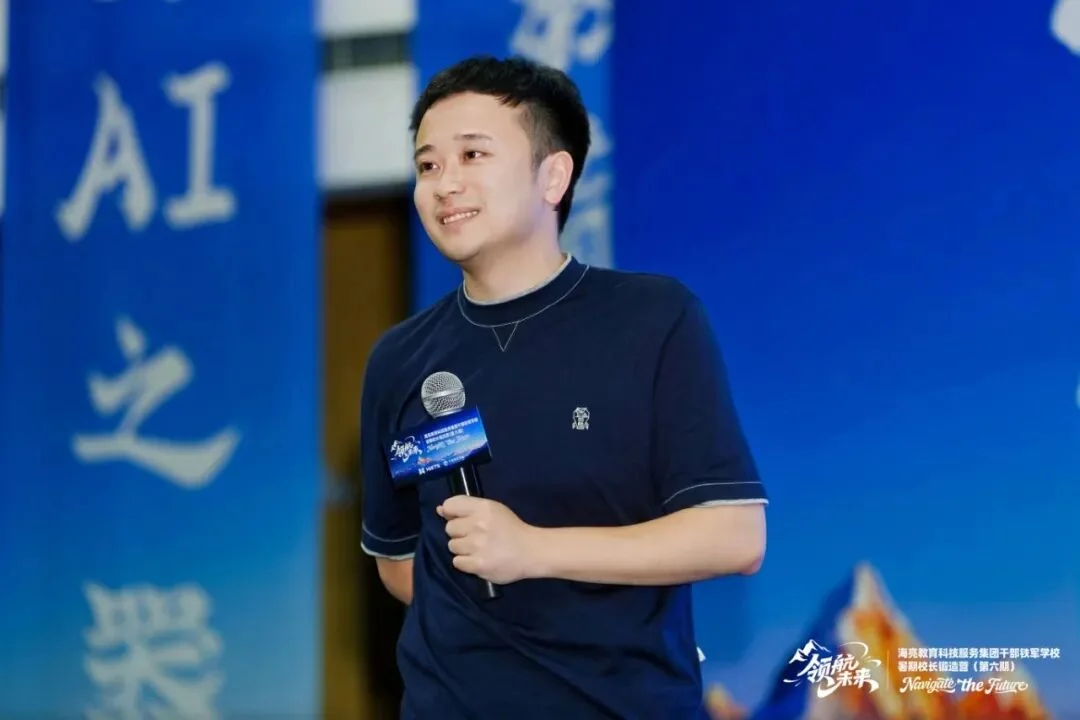
AI may suggest differentiated tasks. But educators must consider language level, motivation, confidence, prior knowledge and individual circumstances.
AI may produce feedback instantly. But students still need meaningful human relationships and encouragement.
China’s national AI education policy similarly emphasizes both technological application and human-centered education, including human-machine collaboration and the continued role of teachers in instructional decision-making.
Five Questions Teachers Should Ask Before Using AI
Before introducing an AI tool into a lesson, educators can ask five practical questions.
1. What learning problem are we trying to solve?
Technology should respond to an educational need rather than create one.
2. What should the student still do independently?
If AI completes all the intellectual work, efficiency may increase while learning decreases.
3. What information will AI provide the teacher?
Useful technology should improve teachers’ understanding of students, not simply produce more data.
4. Where is human judgment essential?
Feedback, motivation, classroom relationships and complex educational decisions still require professional responsibility.
5. How will we know whether the approach works?
Schools need evidence from student learning, participation, teacher experience and classroom observation rather than assuming that new technology equals improvement.
From a Single Lesson to School-Wide Change
One of the strongest messages from the Hailiang training program was that classroom reform cannot remain the responsibility of a few enthusiastic teachers.
School leaders need to create the conditions that allow new practices to become sustainable.
That includes teacher learning time, peer observation, shared lesson design, technical support, evaluation and mechanisms for spreading successful practices.
During the final stage of the camp, 20 groups were organized into four teams and asked to develop implementation proposals around practical challenges such as teacher transition, classroom redesign, technology use and institutional support.
The purpose was to move from “understanding AI” to answering a more concrete question:
What will we do differently when we return to school?
What This Means for International Families
Parents considering schools in China do not need to choose a school based on whether it uses the largest number of AI products.
A more useful question is whether technology improves the learning experience.
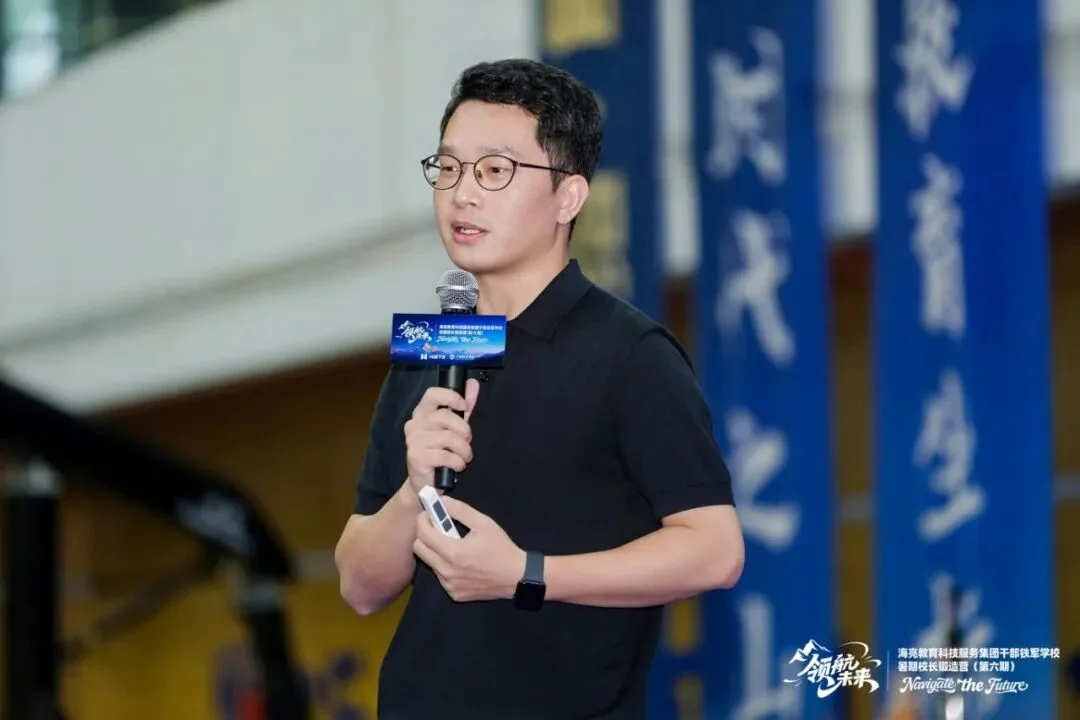
When visiting or evaluating a school, families can ask:
How are teachers trained to use AI?
Can the school show examples of AI-supported lessons?
Does AI increase student participation or mainly automate teacher tasks?
How does the school protect student privacy and promote responsible AI use?
Can students question AI-generated information?
How are teachers supported when they redesign lessons?
At Hailiang International School, technology sits within a broader educational environment that combines international pathways, Chinese learning experiences and access to the wider resources of Hailiang Education. HIS is a K–12 international boarding school in Zhejiang Province serving international and overseas Chinese families.
For families considering a long-term education pathway in China, understanding how teachers learn may ultimately be just as important as understanding what students learn.
The Future of AI for Teachers Is Still Human
The most important lesson from Hailiang’s summer principal development camp was not that teachers need more technology.
It was that teachers need new ways to use professional judgment in a technology-rich classroom.
AI can analyze, recommend, generate and organize.
Teachers still create purpose, relationships, challenge, encouragement and meaning.
That is why successful AI education depends not only on better systems, but on stronger educators.
As schools continue to experiment with AI, the strongest classrooms are unlikely to be those where technology is most visible.
They will be the classrooms where technology helps students think more deeply, participate more actively and become more capable of learning for themselves.
Frequently Asked Questions
What is AI for teachers?
AI for teachers refers to artificial intelligence tools and systems that can support lesson planning, learning analysis, resource creation, classroom interaction, assessment and personalized feedback. Effective use still depends on teacher judgment and clear learning objectives.
How can teachers use AI in the classroom?
Teachers can use AI to prepare learning materials, analyze student understanding, generate differentiated activities, support inquiry, provide formative feedback and identify areas where students need additional support.
What are AI tools for teachers used for?
Common uses include lesson planning, content generation, assessment support, learning-data analysis, feedback, differentiation and administrative tasks. Schools should evaluate tools according to educational value, accuracy, privacy and age appropriateness.
Can AI replace teachers?
AI can automate or support parts of teaching, but education also depends on relationships, professional judgment, motivation, classroom culture and an understanding of individual students. These remain fundamentally human responsibilities.
Why is teacher professional development important for AI?
AI changes not only the tools teachers use but also lesson design, assessment and student interaction. Teachers therefore need continuing opportunities to experiment, observe effective practice, receive feedback and develop responsible-use strategies.
How is AI used in Chinese schools?
Use varies widely by school. Examples include AI-assisted lesson preparation, learning analysis, adaptive practice, classroom feedback, robotics, computer science and AI literacy education. China’s 2026 national action plan also encourages deeper integration of AI across teaching and teacher development.
What should international families ask about AI when they study in China?
Families should ask how AI is used in actual lessons, how teachers are trained, how student data is protected, how AI-generated information is checked and whether technology is helping students become more independent thinkers.