


Spell the Magic: English in Action at HIS’s 7th Spelling Bee
 2026.10.16
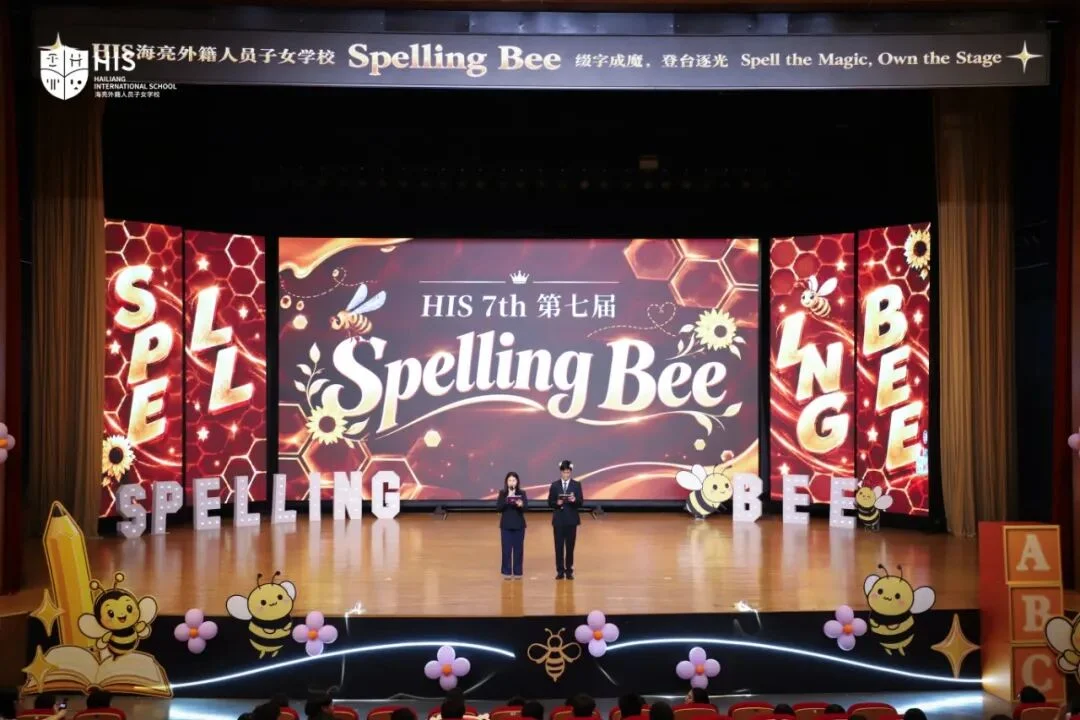
Thirty-five advanced words, spelled correctly in a row. Isabella’s performance at Hailiang International School was a standout moment in the seventh Spelling Bee competition. But the event also had room for students who were finding word cards among campus plants, explaining meanings through gestures or making their own short films.
Held in the school theatre on October 12, 2026, “Spell the Magic, Own the Stage” brought together students from different cultural backgrounds. For families considering HIS, it offered a glimpse of English in use: students listening carefully, making themselves understood and working through challenges with their peers.
Different English Levels, Different Ways to Take Part
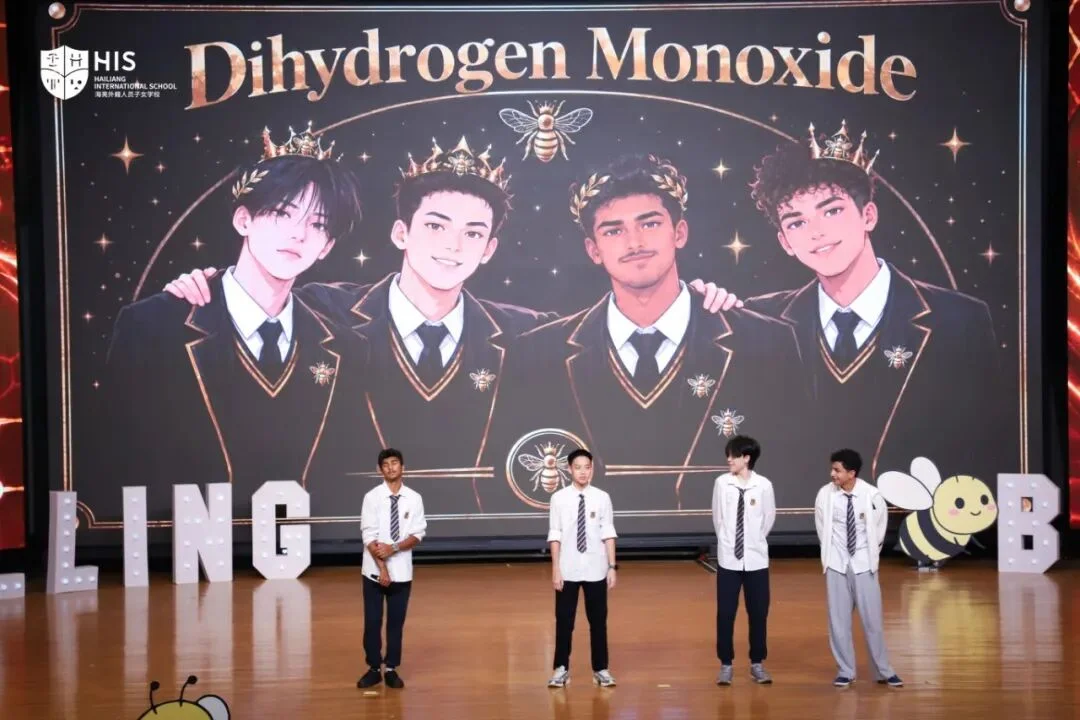
The stage contest had two divisions: Group A (Basic) and Group B (Challenge), each with four teams of four students. The groups competed alternately and were scored separately, giving contestants different levels of challenge within the same school event.
Before the theatre competition, students from across the grades could join campus word activities. In Word Rescue, they searched for hidden word cards and completed spelling tasks for points. At Spin & Spell, they tackled word challenges and spun a lucky wheel. Points could be exchanged for competition skill cards to support the contestants.
Joining in did not depend on being selected for a stage team. The campus activities gave students other ways to take part, whether through a spelling task or by supporting the contestants.
Knowing a Word—and Helping Someone Else Understand It
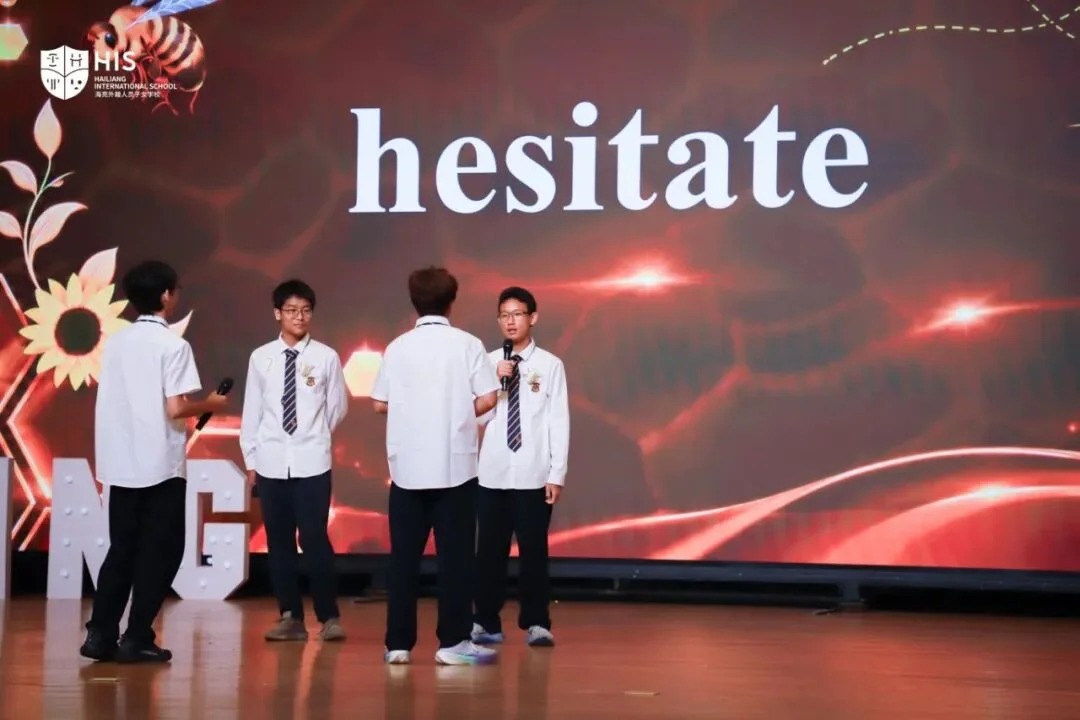
One of the clearest examples of English communication came in Acting Bee. Two teammates faced the screen and used English descriptions and body language to explain a word. The other two, with their backs to the screen, had to identify and spell it. Chinese could not be used during the round.
Knowing the answer was only the starting point. The students giving clues had to find a way to make the meaning clear; those guessing had to listen, watch and connect the clues with a word they knew. The task made vocabulary knowledge a shared problem rather than an individual answer.
Students explored meaning in another way through the Word Skit Show. Teams wrote and filmed original short plays about homophones, words with multiple meanings and entertaining English stories. Their videos opened the event, bringing work created before the competition into the theatre.
The skits and team explanations showed a different side of vocabulary practice from spelling alone. Students used words to communicate something another person needed to understand.
Listening Closely and Thinking on Stage
The competition’s four rounds placed different demands on the contestants. Repeating Bee began with students facing away from the screen. After hearing a word and its definition, they had 15 seconds to repeat and spell it correctly. Isabella, from G10-2, spelled 35 advanced words consecutively and achieved the highest individual score in the opening round.
After Acting Bee came Group Leading Bee, a team buzzer round hosted by Mr. Dylan. Students worked from a word’s first letter and letter count, with an English definition revealed if no team answered within the initial time window. They had to weigh the clues and decide when they were ready to respond.
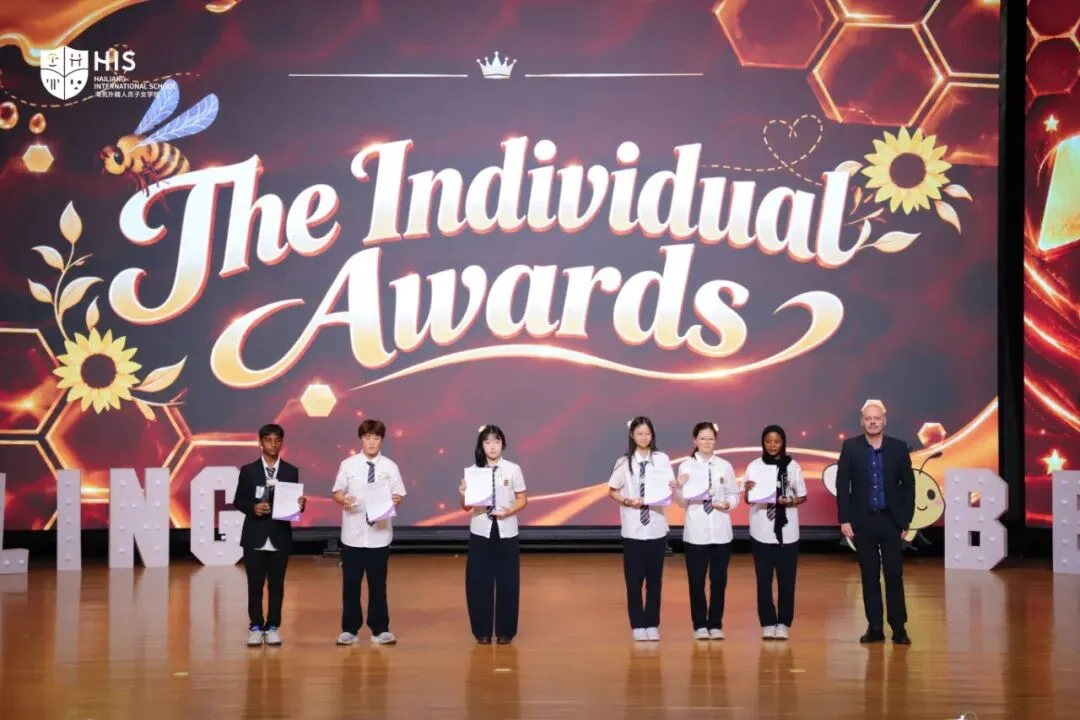
The four highest-scoring contestants in each group from Repeating Bee advanced to Individual Leading Bee. In this final clue-and-buzzer round, they competed on their own. The shift from team rounds to individual decisions gave the audience another view of how students responded under pressure.
The Results—and the Learning Behind Them
G9-1 won the Group A team title. In Group B, G9-1’s The Spellstorm took the championship. The individual awards were:
- Group A: Ikkyu (G9-1), first; Chloe (G8-1), second; Mohit (G8-1), third.
- Group B: Isabella (G10-2), first; Maryam (M-1), second; Amber (G8-1), third.
The two divisions reflected HIS’s approach to differentiated English instruction. Alongside vocabulary foundations, the school integrates reading, academic expression and exploration of the cultural meanings behind words. The event offered specific examples of vocabulary being used in speech, performance and collaboration.
For a family exploring the school, the most revealing moments may be the simplest: a student finding the right explanation for a teammate, or a group turning word meanings into a play. Families can explore more of campus life at Hailiang International School to see the wider setting for these experiences.
FAQ
Was the competition only for advanced English learners?
No. The stage competition had separate Basic and Challenge groups for different English proficiency levels. Students across the grades could also join the campus word activities before the main event.
How did students practise English beyond spelling?
In Acting Bee, teammates explained words through English descriptions and gestures while others guessed and spelled them. For the Word Skit Show, student teams created short films exploring homophones, words with multiple meanings and English stories.
How were students selected for the individual final?
The four highest-scoring contestants in each group from Repeating Bee advanced to Individual Leading Bee, where they competed independently using word clues and buzzers.