



Study in China: What School Rules and Teacher Support Mean
 2026.7.21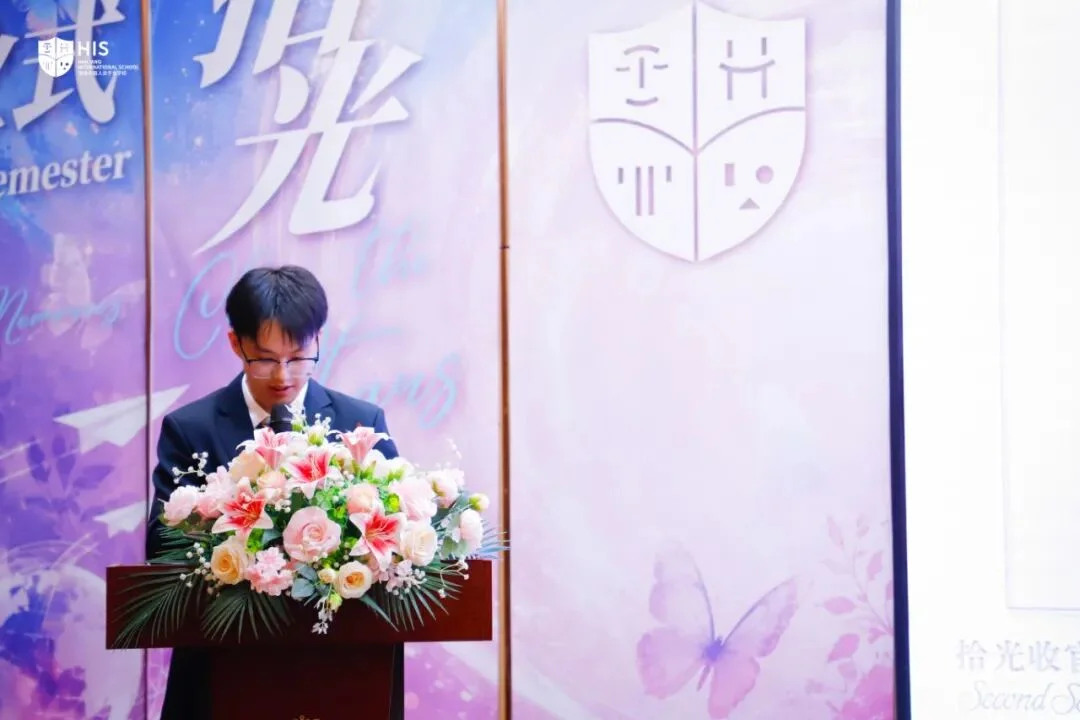
Families researching the benefits of studying in China beyond academics often want to understand how schools in China support student development. Course offerings and examination results are easy to compare, but the deeper educational experience is often found in less visible areas: school routines, teacher attention, shared expectations, and the way adults respond when a student needs help.
A reflection from Zhou Chuxuan, a 2026 HIS graduate who returned to his school as a temporary staff assistant, provides a valuable look at these parts of education.
His experience suggests that school rules are not separate from student care. When they are thoughtfully designed and consistently applied, they help create the conditions in which students can feel safe, remain focused and gradually become more responsible.
Education Is More Than Classroom Instruction
Students naturally associate school with lessons, assignments and examinations.
These are important, but they represent only the most visible layer of a school’s work.
Behind each lesson is preparation. Behind each activity is coordination. Behind each calm school day is a network of teachers and staff members responding to questions, communicating with parents, preparing materials, and solving unexpected problems.
When Zhou was a student, he assumed that teachers had relatively straightforward schedules. After returning to help them, he saw how their work extended far beyond classroom teaching.
A teacher might move between several roles in a single day:
- Subject specialist
- Academic adviser
- Activity organizer
- Document editor
- Parent communicator
- Student mentor
- Dormitory supervisor
- Emergency problem-solver
This matters to families considering study in China because the quality of a school cannot be assessed by curriculum alone. Students also depend on the systems and people surrounding that curriculum.
Why Structured School Environments Matter
Rules are among the first differences students may notice when entering a new school environment.
Requirements related to uniforms, punctuality, phone use, and classroom conduct may initially seem restrictive. Students may understand what a rule says without understanding why it exists.
Zhou had the same questions while he was a student.
After spending time in the school office responsible for student development and behavior, he reached a different conclusion: rules were intended to make safety, order and mutual respect more predictable.
A school community includes students with different habits, personalities, needs and expectations. Without shared standards, the learning environment can quickly become inconsistent.
Effective school rules help answer practical questions:
- Can students learn without unnecessary interruption?
- Do all students understand what behavior is expected?
- Are shared spaces used respectfully?
- Can teachers respond to problems consistently?
- Do students know where to seek help?
- Can families trust the school’s daily routines?
Structure does not automatically produce a good education. Rules that are unclear, excessive, or inconsistently enforced can create frustration.
However, rules that have a clear purpose can reduce uncertainty. Students know what is expected, teachers know how to respond, and families know how the school approaches responsibility.
Discipline and Care Are Not Opposites
Discipline is sometimes interpreted as the opposite of care.
In practice, the two can support each other.
A rule against using phones during class, for example, is not only about preventing a specific behavior. It can protect concentration and ensure that every student has a fair opportunity to participate.
A punctuality policy is not only about recording lateness. It teaches students to respect shared time and prepares them for future academic and professional expectations.
A uniform requirement may reduce visible social differences and reinforce a shared identity, although schools should still explain the reasoning clearly and respond appropriately to individual needs.
The educational value does not come from enforcing a rule mechanically. It comes from helping students understand the relationship between individual choices and the wider community.
The Importance of Being Seen as an Individual
One of the most meaningful parts of Zhou’s experience occurred while he was helping a younger student study.
The student struggled with a problem even after hearing the explanation several times. Zhou could have repeated the same words more loudly or simply moved on.
Instead, he changed his pace and explained the problem again.
When the student finally said, “I think I understand,” Zhou recognized something teachers experience regularly: completing an explanation is not the same as helping someone learn.
Real student support begins with observation.
A teacher must notice when a student:
- Does not understand but is afraid to ask
- Appears tired or emotionally withdrawn
- Is having difficulty adapting to a new environment
- Has improved and needs recognition
- Is capable of more but lacks confidence
- Needs a different explanation or learning method
This form of attention is especially important for students entering an unfamiliar school or cultural environment.
A student may be academically capable but still needs time to understand routines, communication styles, and expectations. Schools that recognize these adjustment needs are better positioned to help students participate fully.
Teacher Support Happens in Small Moments
Teacher support is not always a formal counseling session or scheduled meeting.
Often, it appears in brief daily interactions:
- A teacher notices that a student is quieter than usual
- An adviser checks whether a new student has made friends
- A staff member explains a rule rather than simply issuing a warning
- A teacher stays after class to answer one more question
- A supervisor recognizes improvement that others have missed
These moments may appear small from the outside, but they can influence whether a student feels anonymous or included.
When choosing where to study in China, prospective students should therefore look beyond facilities and promotional materials. They should ask how the school builds relationships between students and adults.
Questions Families Should Ask a School
To understand the quality of student support, families can ask specific questions during an inquiry, interview, or campus visit.
1. How are new students introduced to school routines?
A clear orientation process can reduce uncertainty and help students adapt more quickly.
2. Who supports students outside academic lessons?
Families should understand the roles of advisers, homeroom teachers, counselors, dormitory staff, and student services teams.
3. How does the school identify students who are struggling?
Strong schools do not rely only on students asking for help. Teachers and advisers should have ways to recognize changes in attendance, performance, participation or emotional well-being.
4. How are school rules explained?
Students are more likely to respect expectations when they understand their purpose and see them applied consistently.
5. How does the school communicate with parents?
Families should know how academic progress, behavior, emergencies, and general well-being are communicated.
6. What happens when a student makes a mistake?
The response should combine accountability with guidance. A constructive system helps students understand consequences and make better decisions.
7. Are students encouraged to take responsibility?
Support should not create dependence. Over time, students should learn to organize their work, communicate concerns, and make responsible choices independently.
The Hidden Work Behind a Stable Campus
During his return to HIS, Zhou helped move materials and prepare activities. He saw teachers carrying heavy boxes, creating documents, organizing events, and remaining energetic around students even after long hours.
These observations revealed an important truth: a stable school environment is produced by repeated, often invisible actions.
Students usually experience the final result:
- The classroom is ready
- The materials have been printed
- The event begins on time
- The problem has already been resolved
- An adult is available when help is needed
They may not see the preparation that made these outcomes possible.
For parents evaluating schools, operational reliability is therefore part of educational quality. A school must translate its values into daily practice—not only during open days, but throughout ordinary weeks.
From External Rules to Internal Responsibility
The long-term purpose of school structure should not be permanent control.
Students begin by following expectations established by adults. Gradually, they should understand the reasoning behind those expectations and learn to manage themselves.
This progression can be described in three stages:
- External guidance: The school defines clear expectations.
- Growing understanding: Students recognize why those expectations matter.
- Independent responsibility: Students make appropriate decisions without constant supervision.
Uniforms, schedules, and classroom rules are only the starting point. The larger goal is to develop judgment, reliability and respect for others.
A student who understands why punctuality matters no longer needs lateness rules to be responsible. A student who understands how phone use affects concentration can make better decisions in university and the workplace.
A More Complete Way to Evaluate Education
Academic achievement remains an important consideration for anyone planning to study in China. Students need suitable courses, qualified teachers and effective preparation for their next stage.
But education should also be evaluated through broader questions:
- Does the student feel known?
- Are expectations clear and reasonable?
- Do teachers respond patiently when learning becomes difficult?
- Does the school balance support with independence?
- Are students developing confidence as well as knowledge?
- Do daily routines reflect the values promoted by the school?
Zhou’s experience did not lead him to believe that every rule was easy or every school day was comfortable.
Instead, it helped him understand what those structures were trying to achieve.
The teachers who once guided and supported him had carried responsibilities he could not see as a student. By returning in a new role, he began learning how to offer that same patience and attention to younger students.
For prospective students and families, that may be one of the most meaningful benefits of studying in China: joining a school community that does not simply deliver lessons, but helps students develop the confidence and responsibility required for the stages that follow.
Experience Source: This article draws on the first-hand reflections of Zhou Chuxuan, a member of the HIS Class of 2026, after he returned to campus and assisted teachers, school offices, and younger students.