


Study in China: What HIS Teaches Beyond the Textbook
 2026.7.23
For students and families asking what it is like to study in China as an international student, academic programs are only part of the answer. A meaningful international high school experience in China can also include cultural exploration, independent thinking, empathy, and the ability to communicate with people from different backgrounds. At HIS, these qualities are developed not only through textbooks, but also through classroom discussions and practical cultural experiences.
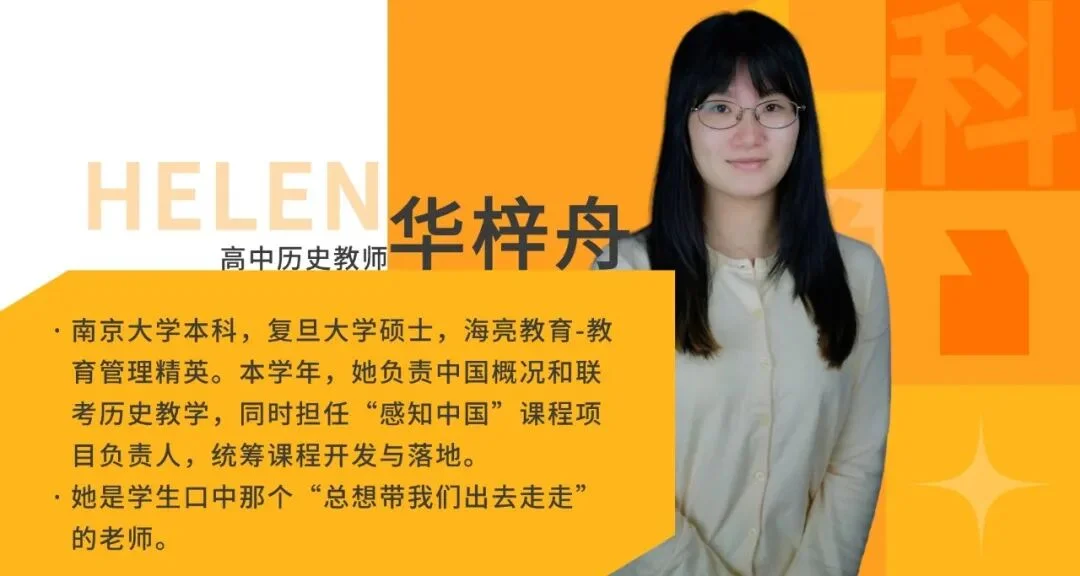
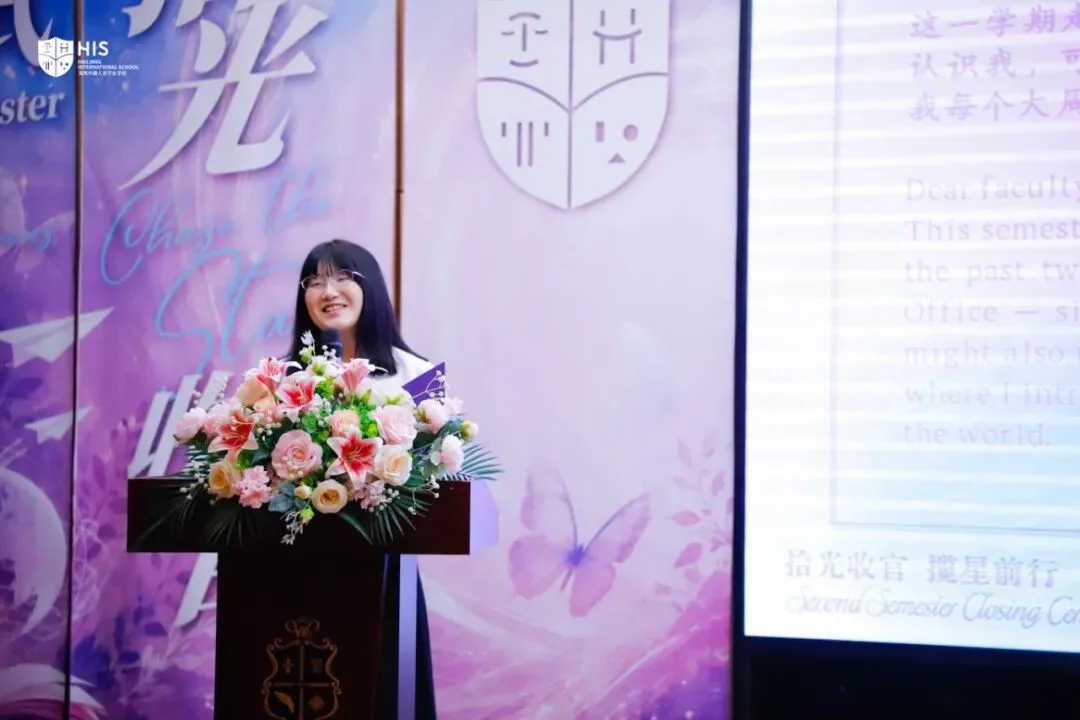
At the end of the academic year, a teacher representative shared her reflections with the HIS community. As a teacher of the China Overview course and an organizer of the school’s “Perceiving China” activities, she works closely with students from different countries, linguistic backgrounds, and cultural traditions.
Her message was straightforward: grades matter, but they are not the only preparation students need for their future.
Learning About China Inside and Outside the Classroom
The China Overview course and the “Perceiving China” program are distinctive parts of the learning experience at HIS.
In the classroom, students explore the development of Chinese civilization, history and society. Outside the classroom, they encounter cultural traditions through visits, handicraft activities, community experiences and student presentations.
These two learning spaces serve different purposes, but they share an important characteristic: both bring together students from around the world.
Students may have different mother tongues, family backgrounds and cultural identities. When they examine the same historical event or participate in the same cultural activity, they do not necessarily reach the same conclusion.
That difference is not treated as a problem to be eliminated. It becomes part of the learning process.
Why Cross-Cultural Learning Does Not Require One Answer
Students are often accustomed to learning tasks that have standard answers. In many academic subjects, they are expected to identify the correct solution, demonstrate their understanding and receive a measurable result.
Cross-cultural education works differently.
When students discuss a historical tradition, social custom or cultural practice, each person brings an existing cultural perspective into the conversation. One student may focus on family relationships, while another may notice artistic details, community values, or similarities with customs in another country.
During practical activities, some students actively express their interpretations. Others listen carefully before responding. Some compare what they have seen with traditions from their own countries.
The goal is not to make every student think in the same way.
The goal is to help them:
- Recognize that different perspectives exist
- Listen without immediately judging
- Explain their own opinions respectfully
- Remain curious about unfamiliar traditions
- Understand disagreement without treating it as hostility
- Learn from cultural similarities and differences
This is one of the central purposes of cross-cultural learning in China. Students do not have to abandon their own identities in order to understand another culture. Instead, they learn to remain grounded in who they are while becoming more open to the world around them.
The Pressure to Produce Immediate Results
Modern students often feel that every activity must lead to an immediate and visible result.
A lesson should improve a grade. A project should produce an award. An extracurricular activity should strengthen a university application. A skill should quickly become measurable.
When progress is not immediately visible, students may begin to question whether the activity is useful.
They may also question themselves.
One disappointing performance can feel like evidence that they are falling behind. A difficult semester can make them believe they are not improving. When they compare their progress with that of classmates, they may feel pressured to follow someone else’s pace.
The teacher’s message challenged this way of thinking.
Not every valuable part of education can be converted into a score. Some forms of growth appear gradually, through repeated experiences, thoughtful conversations and moments of reflection.
Learning to understand another person, reconsider an assumption or remain patient with an unfamiliar culture may not produce an immediate academic result. However, these abilities can influence how students study, work and build relationships throughout their lives.
What Students Need Beyond Academic Knowledge
Textbook knowledge helps students prepare for academic assessments. Strong subject foundations are necessary for examinations, university applications and future study.
However, academic knowledge alone may not prepare students for every environment they will enter.
Wherever students go after graduation, they are likely to meet people whose experiences, values and communication styles differ from their own. They may study in another country, join an international workplace or collaborate with people they have never met before.
In those situations, several abilities become especially important.
Independent Thinking
Students need to evaluate information rather than accept every opinion automatically.
Independent thinking does not mean rejecting advice or refusing to cooperate. It means asking thoughtful questions, examining evidence and forming conclusions with care.
It also allows students to enter a new cultural environment without losing their personal judgment.
Respect for Diversity
Respecting diversity requires more than recognizing that people are different.
Students must learn to interact constructively with people whose beliefs or habits may initially seem unfamiliar. They do not have to agree with every perspective, but they should be able to understand why another person may see an issue differently.
Cultural Empathy
Cultural empathy is the willingness to understand an experience from another person’s position.
It encourages students to move beyond quick assumptions. Instead of labeling an unfamiliar custom as strange, they learn to ask what history, values, or social conditions have shaped it.
Patient Curiosity
Some knowledge takes time to develop.
Students who can slow down, observe carefully, and remain curious are more likely to gain a meaningful understanding of a new culture. They move beyond collecting simple facts and begin to recognize the connections between history, daily life and personal identity.
These abilities represent important benefits of studying in China beyond academics. They can help students become more adaptable, thoughtful and confident in international environments.
Staying Connected to Your Own Cultural Roots
Studying another culture does not require students to weaken their connection with their own.
HIS does not ask students to replace one cultural identity with another. Nor does it expect everyone to develop identical beliefs about China or the wider world.
Instead, students are encouraged to maintain their own cultural foundations while developing the confidence to engage with differences.
This balance matters.
Without a sense of personal identity, students may feel that they need to change themselves in order to fit into every new environment. Without openness, they may avoid people and ideas that challenge their existing assumptions.
A healthy cross-cultural education supports both stability and flexibility.
Students can be proud of their own languages, traditions, and backgrounds while remaining interested in the experiences of others. They can protect their own values while learning how to live and work peacefully with people who make different choices.
Why Teachers Still Maintain High Academic Expectations
A focus on personal development does not mean that academic standards become unimportant.
Teachers continue to set clear expectations for classroom participation, assignments and subject knowledge because students need a strong academic foundation.
Discipline and intellectual freedom are not opposites.
Academic structure gives students the knowledge and habits needed to pursue larger questions. Students who can read carefully, communicate clearly and manage their time are better prepared to participate in complex cultural discussions.
The purpose of high expectations should not be to make students anxious or force them into constant comparison. It should be to help them develop the skills and confidence needed for future independence.
Teachers can therefore be academically demanding while still recognizing that students develop at different rates.
Students Do Not Need to Follow the Same Timeline
One of the most important messages in the teacher’s speech was that students should not allow external standards to define every part of their progress.
Students naturally compare themselves with others. They notice who receives the highest grades, learns a language most quickly or appears most confident during presentations.
Comparison can sometimes provide motivation, but it can also distort how students evaluate themselves.
A student who needs more time to understand a topic is not necessarily less capable. A student who is quiet during discussions may still be thinking deeply. A student who has not yet found a clear direction may still be building the experiences needed to make a thoughtful decision.
Long-term growth rarely follows one fixed schedule.
Students should take academic responsibilities seriously, but they do not need to force themselves to match another person’s pace. Consistent effort and honest reflection are often more sustainable than constant competition.
Using the School Holiday for Reflection and Recovery
The end of a school year provides an opportunity to rest, but rest does not have to mean abandoning all thought and learning.
Students can use the holiday to review the year without turning it into another period of academic pressure.
The teacher suggested several practical approaches:
Review Difficult Topics
Students can identify the subjects or concepts that repeatedly caused difficulty during the semester.
The purpose is not to repeat every lesson. It is to understand where confusion began and decide what support may be needed next term.
Continue Reading
Reading allows students to maintain intellectual curiosity without following the structure of a formal assignment.
They may choose literature, history, current affairs or topics connected with personal interests.
Spend Time With Family
School schedules can leave limited time for meaningful family interaction. Holidays create space for conversation, shared activities, and rest.
Create Unstructured Time
Students do not need to fill every hour with a measurable task.
Unstructured time can support creativity, emotional recovery, and independent reflection. It allows students to process what they have learned and return to school with renewed attention.
What Families Can Look for When Choosing a School in China
Families considering an international school should examine more than the curriculum and examination results.
A school’s educational values are also visible in how it approaches culture, student well-being and intellectual development.
Useful questions include:
- How does the school help international students understand Chinese culture?
- Are cultural activities connected with classroom learning?
- Do students have opportunities to share their own cultural backgrounds?
- How are different opinions managed during discussions?
- Does the school encourage independent thinking?
- How do teachers respond when students progress at different rates?
- Is academic rigor balanced with emotional well-being?
- Are students encouraged to reflect on experiences outside the classroom?
The answers can help families determine whether a school provides only an academic program or a more complete educational environment.
Preparing Students for Life in an Interconnected World
Students may eventually move to different countries, universities, and professional environments.
The specific knowledge they need will change. Technologies will develop, industries will evolve, and new social challenges will emerge.
However, several human abilities will remain valuable:
- Thinking independently
- Communicating respectfully
- Understanding unfamiliar perspectives
- Remaining confident without becoming closed-minded
- Cooperating across cultures
- Recognizing beauty and meaning beyond immediate results
These qualities cannot be developed through memorization alone.
They require repeated contact with different people, honest reflection, and opportunities to reconsider familiar assumptions. They also require a school culture in which students feel secure enough to express themselves and humble enough to listen.
More Than a Place to Earn Grades
To study in China is not only to complete courses in a different country.
At its best, it is an opportunity to experience another society directly, examine the relationship between cultures and develop a more thoughtful understanding of one’s own identity.
The education HIS aims to provide goes beyond examination preparation. It seeks to give students the confidence to preserve their own judgment, the openness to respect diversity and the empathy to understand people whose lives differ from theirs.
These qualities may not always appear on a transcript.
Yet when students enter a new country, a multicultural university or an international workplace, they may prove to be among the most practical lessons they have learned.
Experience and Source Note: This article is based on a year-end speech delivered by a teacher representative at HIS. The speaker teaches the China Overview course and leads “Perceiving China” cultural activities, giving her direct experience of classroom-based and experiential cross-cultural education at the school.