



Zhejiangs First Education Technology Unicorn Is Born!
 2026.4.30
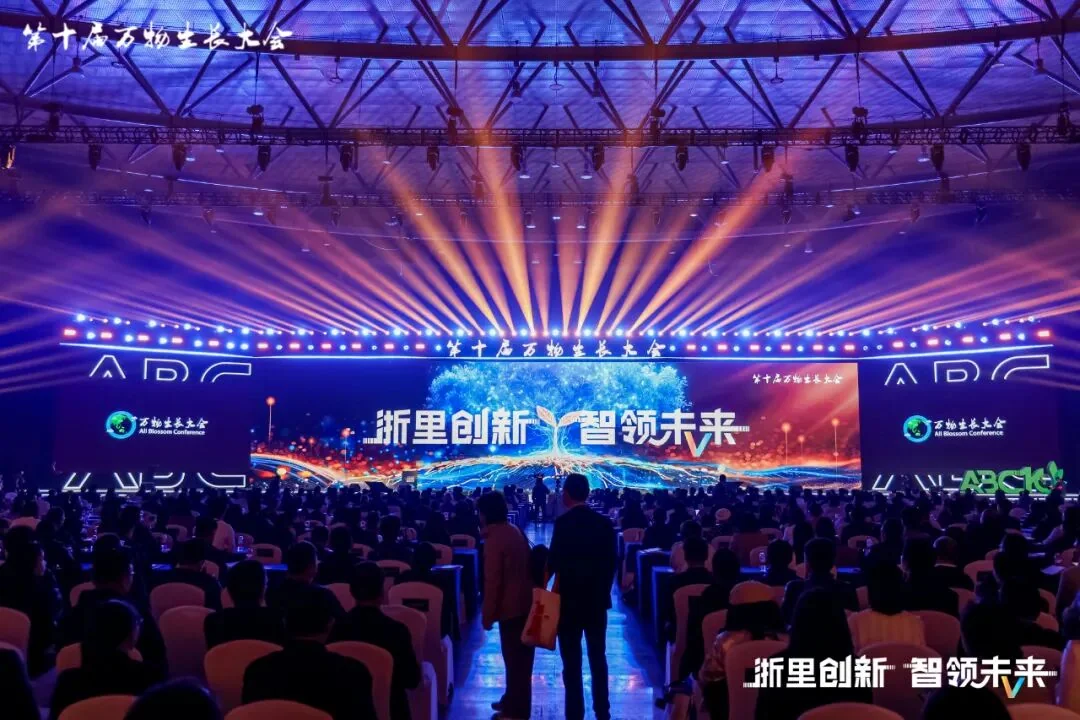
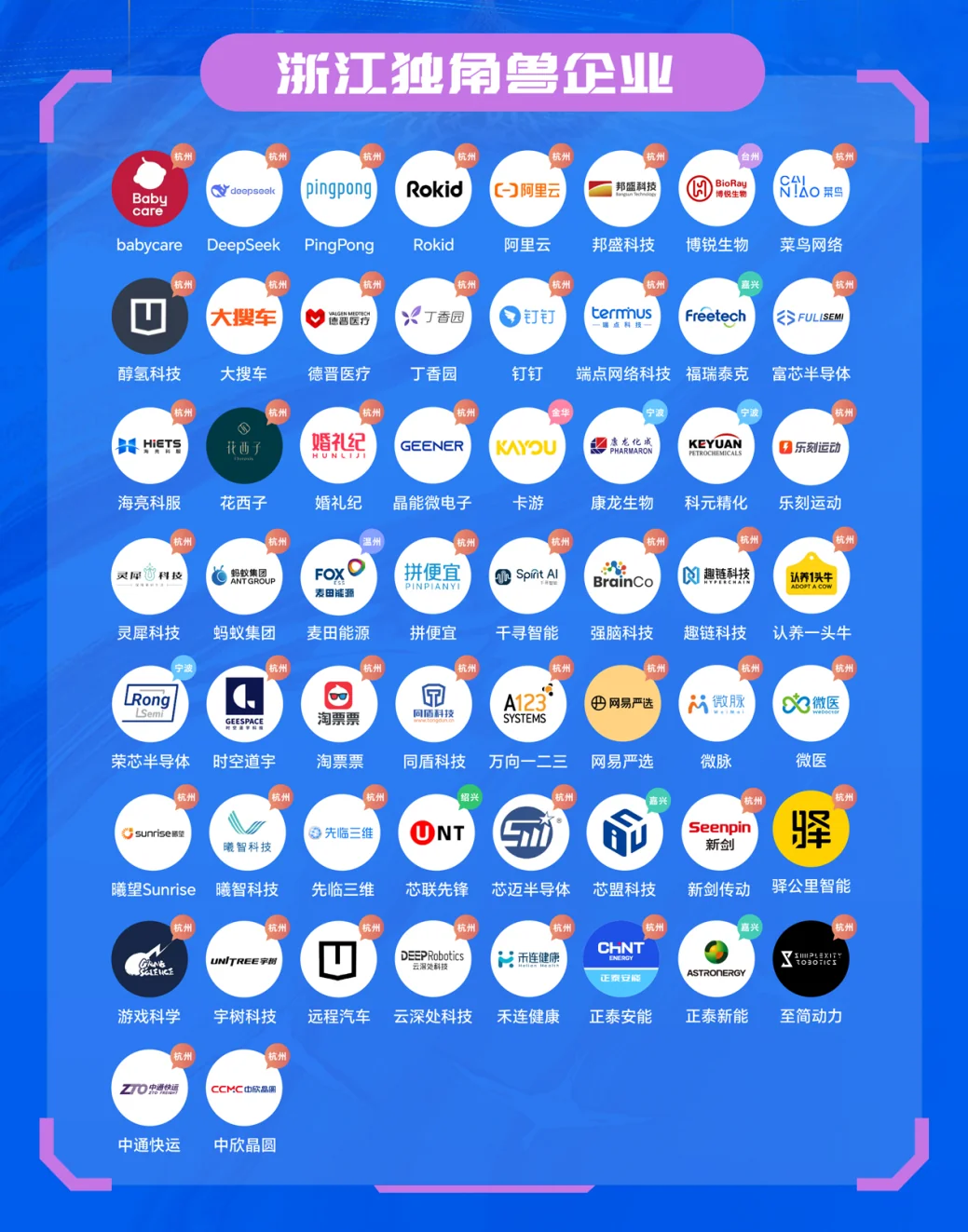
On April 23, at the 2026 Tenth All Things Grow Conference hosted by the Zhejiang Provincial Committee of the China Democratic National Construction Association, the Zhejiang Chamber of Commerce, and the China Association for the Promotion of Investment Development, the 2026 “Zhejiang Unicorn Enterprise List” was officially released. A total of 58 companies were selected, including newly listed companies such as DEEP Robotics and Xiwang. Among them, Hailiang Technology Services successfully entered the 2026 Zhejiang Unicorn Enterprise List, becoming China’s first education technology unicorn company focused on empowering schools and Zhejiang’s first unicorn company in the field of education technology.
Since 2018, Hangzhou’s venture capital circle has produced more than 80 unicorn companies, many of which have become leading companies in their respective industries. Looking across a decade-long trajectory, unicorn companies not only represent high-potential companies of the present, but also contain the value validation of China’s innovation economy.
01 A Decade of Migration in Unicorn Tracks
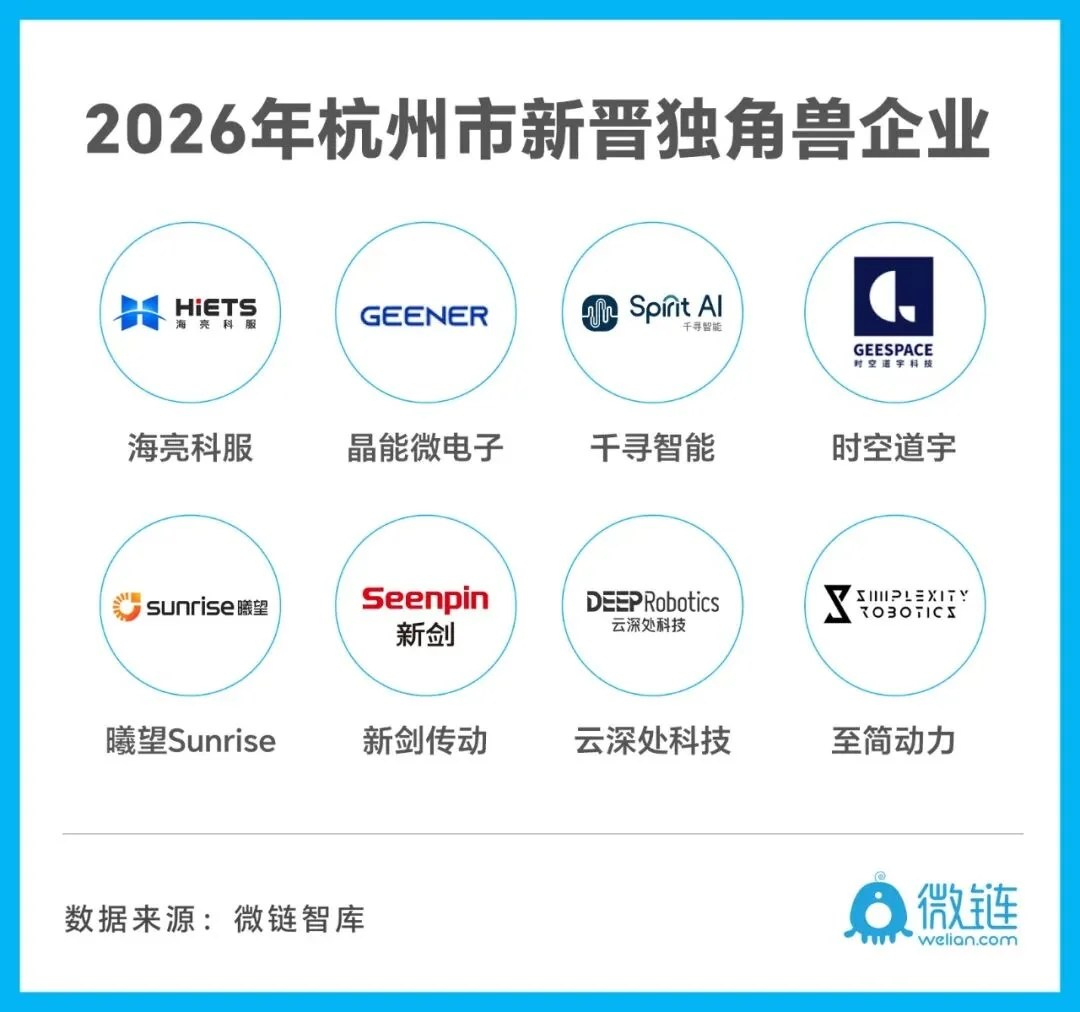
In 2026, Zhejiang’s unicorn camp expanded again, adding nine new companies, including Hailiang Technology Services and DEEP Robotics, one of Hangzhou’s “Six Little Dragons,” covering industries such as education technology, AI, computing power, and embodied intelligence.
If the timeline is stretched out, the changes in the unicorn list are also a microcosm of changes in the industrial economy.
As a major center of China’s digital economy, Zhejiang’s unicorn landscape is undergoing profound reconstruction. From early consumer internet and financial technology to today’s concentrated emergence of foundational technology companies in artificial intelligence, embodied intelligence, new energy, and other fields, the industry character of unicorn companies is taking on more colors of the “future.”
Qunhe Technology (Kujiale), which became the first listed company among the “Six Little Dragons of Hangzhou” last week, was the first to become a Hangzhou unicorn company in 2019. In 2023, BrainCo advanced into the unicorn tier. During this period, Hangzhou’s unicorn companies began shifting from business-model innovation to breakthroughs in foundational technology, and core technologies such as cloud computing, big data, and artificial intelligence became important factors in corporate competitiveness.
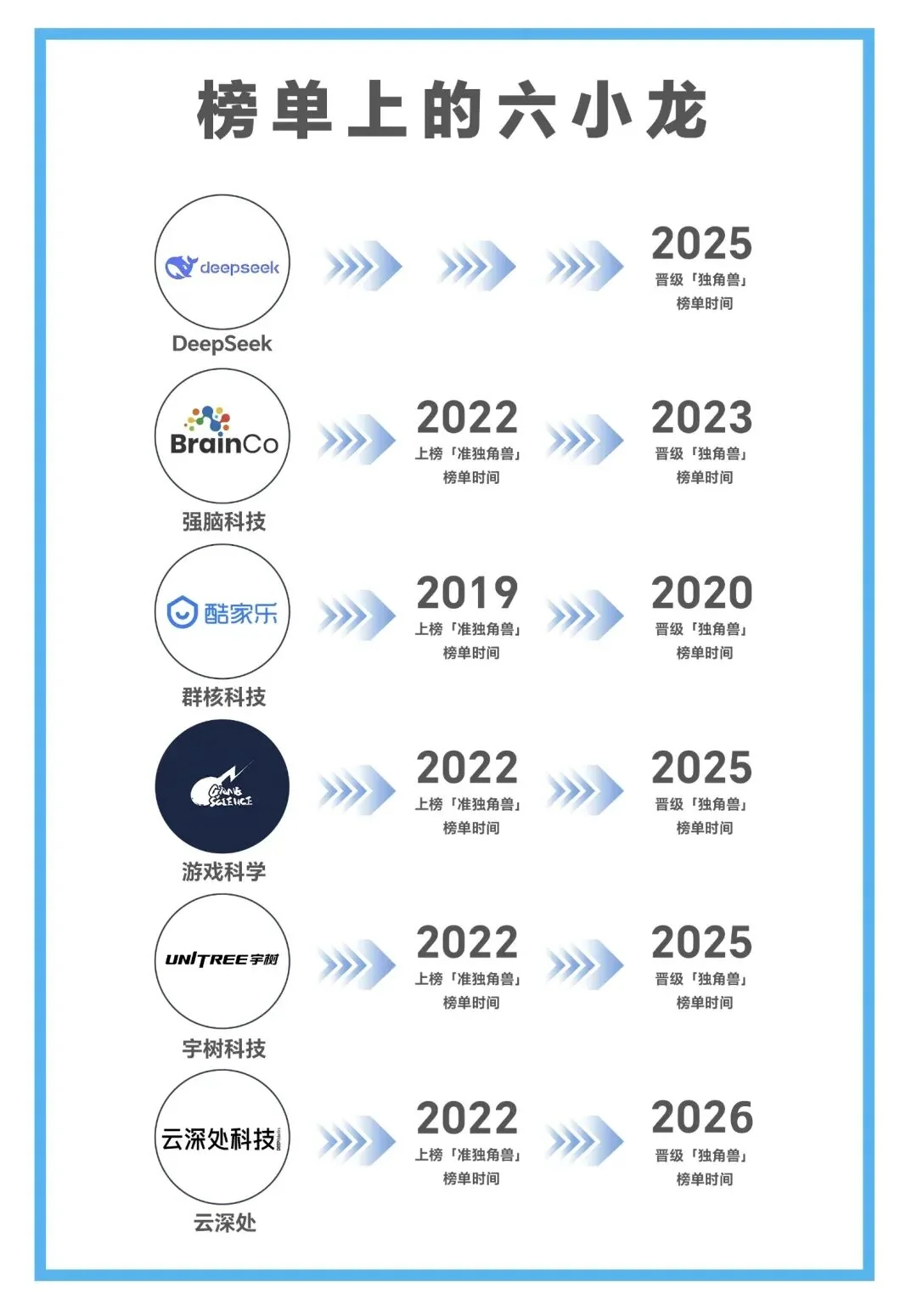
Entering 2024, “new quality productive forces” became an industry consensus, and emerging industries such as artificial intelligence, embodied intelligence, and new energy became popular tracks for the birth of unicorn companies. In 2025, DeepSeek, Game Science, and Unitree Robotics all evolved into unicorn companies. By 2026, DEEP Robotics and Hailiang Technology Services were selected together. The latter became China’s first education technology unicorn company focused on empowering schools and Zhejiang’s first unicorn company in the field of education technology, showing that the effect of technology empowerment is also gradually extending to the application layer.
Looking across the 2026 unicorn enterprise list, Zhejiang is gradually forming a new urban industrial backbone in which breakthroughs in foundational technology and application-layer innovation grow in both directions. Foundational technology companies provide support for application-layer companies through core technological innovation; application-layer companies, through verification and feedback in real scenarios, promote the continuous iteration and improvement of foundational technologies.
This also means that the market’s valuation system for unicorn companies has changed. It has shifted from emphasizing the explosive power of business models to evaluating a company’s core technology barriers and its ability to apply them industrially.
02 Co-Builders of the Innovation Value Chain
Unicorn companies usually take innovation as a core strategy. They can break traditional industry rules, meet market needs in unique ways, and create new value.
For example, DeepSeek enabled AI to spontaneously develop reasoning ability through a purely deep learning method. At the same time, with 1/18 of GPT-4os training cost and 1/10 of its team size, it developed a model product with comparable performance. Because it released its models in an open-source manner, multiple industries and many companies “joined hands” with DeepSeek, realizing the application of artificial intelligence in multiple scenarios and products, bringing large-model reasoning and search capabilities into the domestic mainstream market, and benefiting more user groups.
The emergence of DeepSeek is not an isolated case among unicorn companies. They are evolving from market participants into co-builders of industry value chains. Hailiang Technology Services dual engines of “smart education + career technology” build an education service system that runs through the entire process from learning to school advancement. Unitree Robotics has sounded the market signal for the embodied intelligence industry, and BrainCos non-invasive brain-computer interface has accelerated the market from early exploration toward industrialization.
They not only provide products or technical capabilities, but also assume the role of “definers” in the industrial chain, transforming technology into foundational capabilities that can be reused by multiple parties.
The value of unicorn companies is not only reflected in their current capabilities, but also hidden in their value for the future. Using talent and capital as engines, companies are opening up new industrial tracks, breaking through key core technologies, creating benchmark products for industries, reshaping the efficiency of traditional application scenarios through the deep integration of technological innovation and industry, and continuously empowering the development of new, quality productive forces.
At the same time, the strategic value of Chinese unicorn companies has gone beyond the purely economic sphere and has become a new economic growth point and innovation driver for many localities. In 2025, unicorn companies were written into the government work report for the first time, which proposed cultivating innovative enterprises in a tiered manner, promoting the development and growth of specialized and sophisticated small and medium-sized enterprises, supporting the development of unicorn companies and gazelle companies, and enabling more companies to accelerate in new fields and new tracks. The 2026 government work report again proposed building mechanisms to promote the development and growth of specialized and sophisticated small and medium-sized enterprises and to cultivate unicorn companies.
03 Filling the Gap in Education Technology
For Hangzhou, its science-and-technology innovation genes run deep across thousands of industries. Unicorn companies, and even super unicorn companies, have already emerged in multiple future-industry tracks such as artificial intelligence and cloud computing. With the continuous breakthroughs of technologies such as artificial intelligence, the imagination of the “future” is not only about single-point technological innovation, but also about the reshaping of real scenarios through technological applications.
At the end of 2025, the State Council issued the Implementation Opinions on Accelerating Scenario Cultivation and Opening Up to Promote the Large-Scale Application of New Scenarios, proposing that in the field of artificial intelligence, China should strengthen the tackling of key core technologies and their promotion and application, accelerate the cultivation and opening of high-value application scenarios, and better meet development needs in science and technology, industry, consumption, peoples livelihood, governance, global cooperation, and other fields.
Education, as an important livelihood scenario, has long been characterized by high complexity, low standardization, and strong personalized needs. The value of AI in education is not an additive effect of single-point efficiency improvement, but a multiplier effect created by the coordination of multiple scenarios and the allocation of multiple resources. Therefore, the difficulty of implementing education technology does not lie in the tools themselves, but in whether they can run stably over the long term and whether there is a systematic delivery capability.
This year, Zhejiang produced a unicorn company in the field of education technology–Hailiang Technology Services. Starting from education scenarios, it has reverse-built a technology system. Relying on real campus scenarios and combining technology with services, it provides systematic solutions for regions and schools.
What Hailiang Technology Services has verified is not only the feasibility of a particular solution, but also a feasible path for “systemic infrastructure” in education in the digital-intelligent era: taking schools as the entry point, embedding smart education products and services into teaching and management systems, and at the same time extending into students growth and development, forming a career technology service chain that runs through the entire learning process.
In campus scenarios, Hailiang Technology Services embeds AI into key links such as classroom teaching, teacher development, student growth, and school management. It connects the full process of “before class–during class–after class,” turning the classroom into a “dynamic feedback system” and promoting teaching from experience-driven practice toward student-centered data-driven practice.
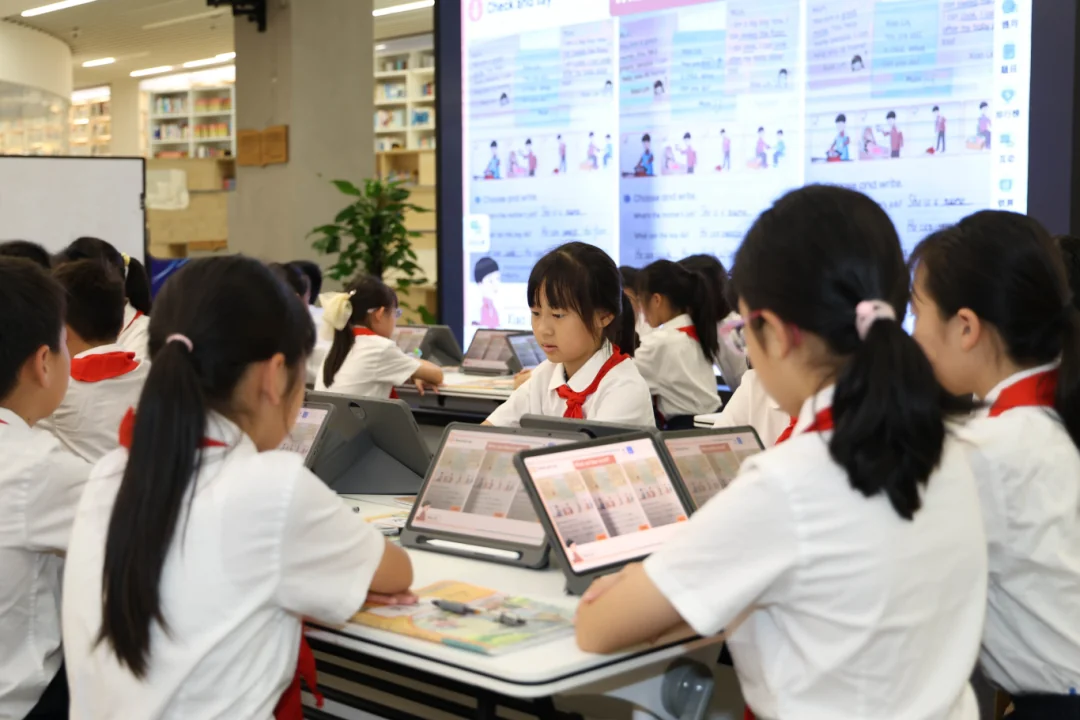
Solutions are the first step. Cross-regional replication is a recognized difficulty in the education industry. Through a delivery model of “technology + service + outcomes,” Hailiang Technology Services combines technological capabilities with teaching-research support, teacher training, and management mechanism design, lowering the threshold for schools to use the system and enabling best practices to run stably over a wider area through AI. At present, related solutions have been implemented in more than 200 districts and counties across China, achieving a leap from “single-school pilots” to “regional-level implementation.”
Outside school, based on its self-developed “e-Career large model,” Hailiang Technology Services extends its service boundary from the classroom to students’ long-term development. Around self-awareness, path selection, and resource matching, it builds a service platform of “decision support + service undertaking.” The large model provides students with precise self-awareness diagnosis as well as consultation and planning for advancement pathways; the platform, as a “resource ecosystem,” integrates high-quality educational resources, matches a service product system around students’ needs, and undertakes long-term educational consumption needs from families.
By establishing a stable entrance and data-driven decisions through in-school scenarios, and then extending to the out-of-school student side to expand long-term service value, Hailiang Technology Services has built an internally linked “scenario-based service network” system, ultimately realizing integrated comprehensive capabilities in “technology, scenario understanding, and service delivery.”
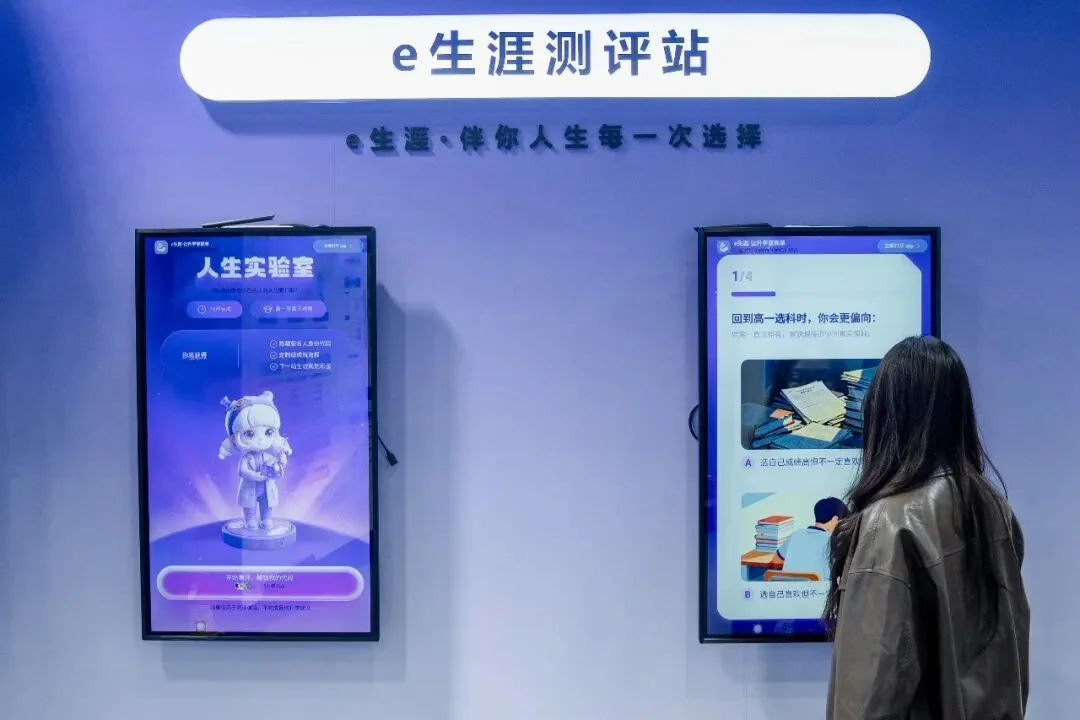
On April 2, 2026, the Ministry of Education and four other departments jointly issued the “Artificial Intelligence + Education” Action Plan, proposing to promote the integration of intelligent technology with all educational elements, through the whole process, and across all scenarios. Hailiang Technology Services is also exploring and verifying how AI can transform from an efficiency tool into a foundational capability within the education system.
The China Unicorn Enterprise Development Report (2026) points out that the value evaluation system for unicorn companies is shifting from expectation-driven to capability-oriented, and its core lies in the verifiability of technological capabilities and the level of industrialization. In education, a long-term and complex scenario, whoever can establish closed-loop capabilities in “technology–scenario–service” is more likely to define its long-term value coordinates in the process of industrial reshaping.
Fang Jingyi | Author
Wang Wan | Proofreader