From Theory to Practice: Experiencing Mid-Autumn Culture at HIS
 2025.10.11
At HIS, learning Chinese goes beyond language acquisition—it becomes a process of understanding culture, expressing ideas, and experiencing traditions firsthand. Through immersive activities that connect knowledge with real-life practice, students engage with Chinese culture in ways that are both meaningful and memorable.
Integrating Learning with Practice
This hands-on lesson forms a three-stage cycle of theory–creation–practice, bringing the Experience China program to life and making cultural learning more immersive and multidimensional:
- Foundation in Chinese Class: Earlier lessons introduced words like “moon” and “reunion,” along with legends like Chang’e Flying to the Moon, building a cognitive foundation.
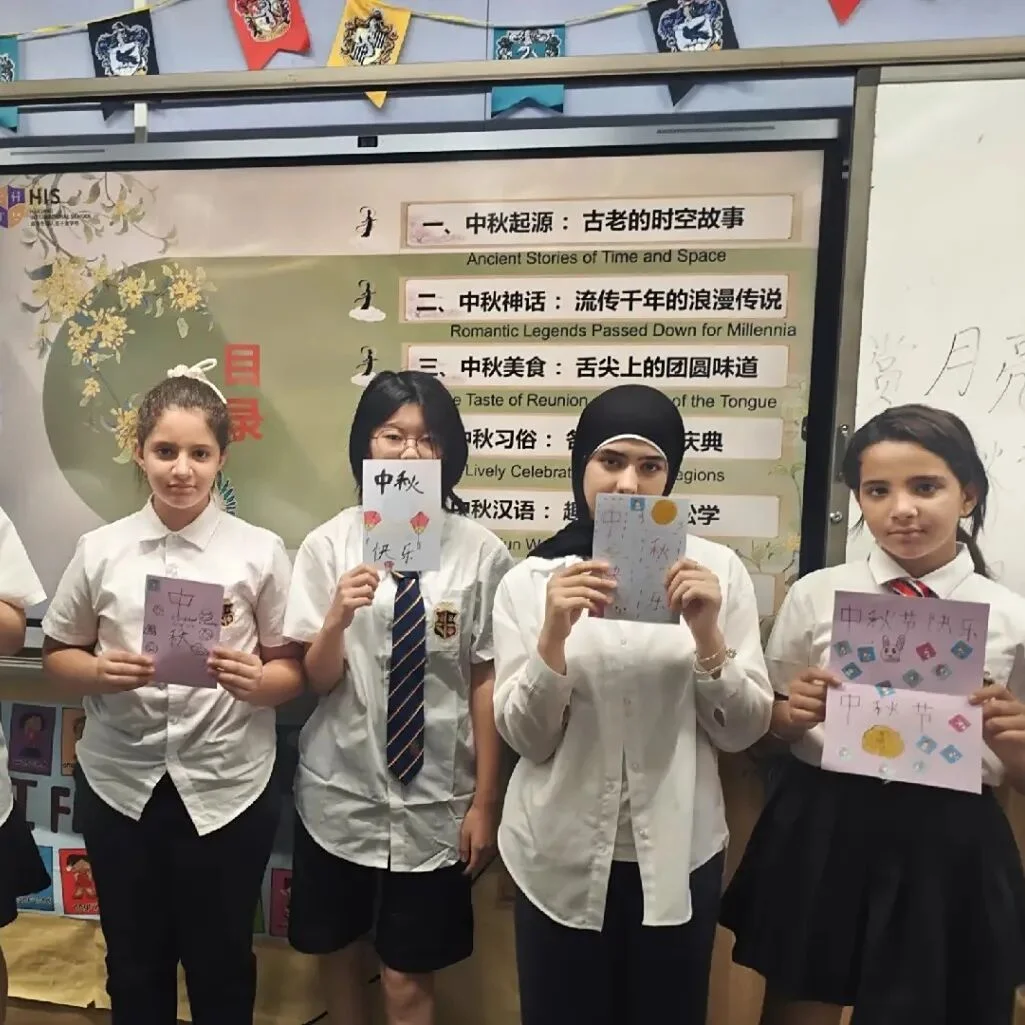
- Expression Through Creation: In art and writing sessions, students drew Mid-Autumn scenes—jade rabbits beneath the moon, families gazing together—and practiced writing “Happy Mid-Autumn Festival” in Chinese, turning understanding into personal expression.
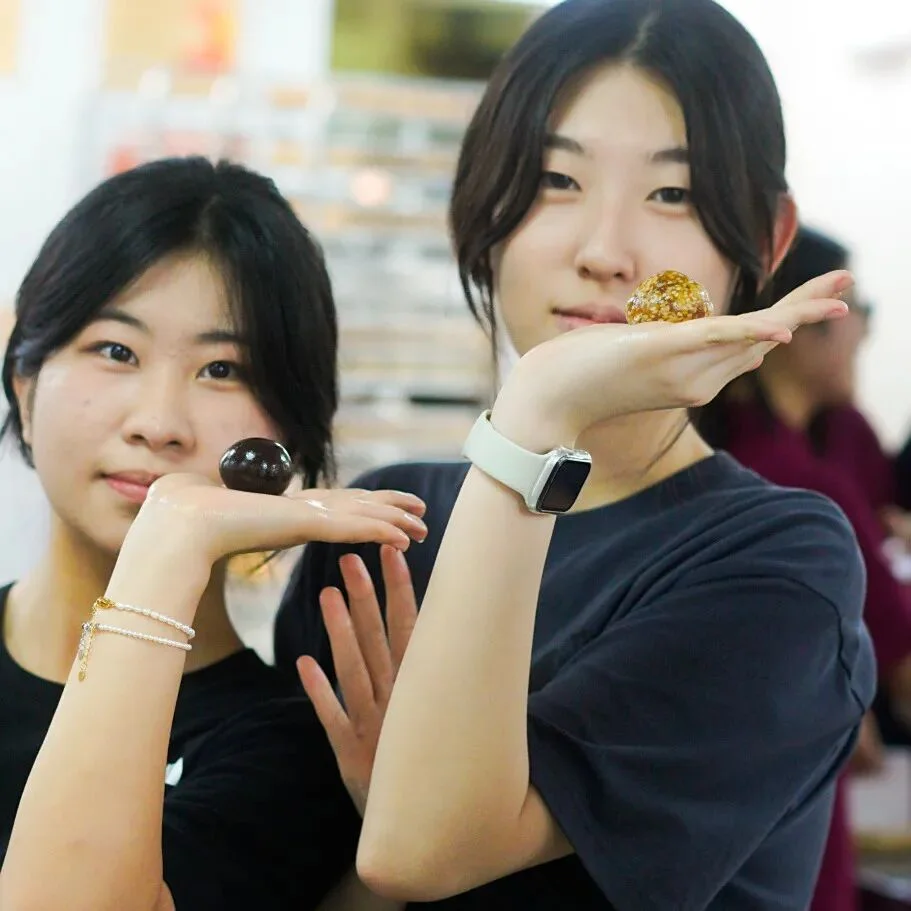
- Bringing Knowledge to Life: While making mooncakes, abstract concepts suddenly became tangible: the texture of the dough mirrored descriptions in greeting cards; the aroma evoked the idea that “reunion means sharing”; the jade rabbit mold brought the legend of Chang’e to mind.
This model—“learn the meaning, express it creatively, then practice the custom”—breaks away from the idea that “culture stays in the classroom,” embodying HIS’s educational philosophy of“integrating knowledge with action.”
Cross-Cultural Resonance
At the closing sharing session, warm moments of cultural exchange came to life.
Kritika, a student from India, showed her greeting card: “I drew the Chinese moon and Indian laddu. During Mid-Autumn, you share mooncakes; during Diwali, we share laddus. The hope for reunion and peace is just the same.”
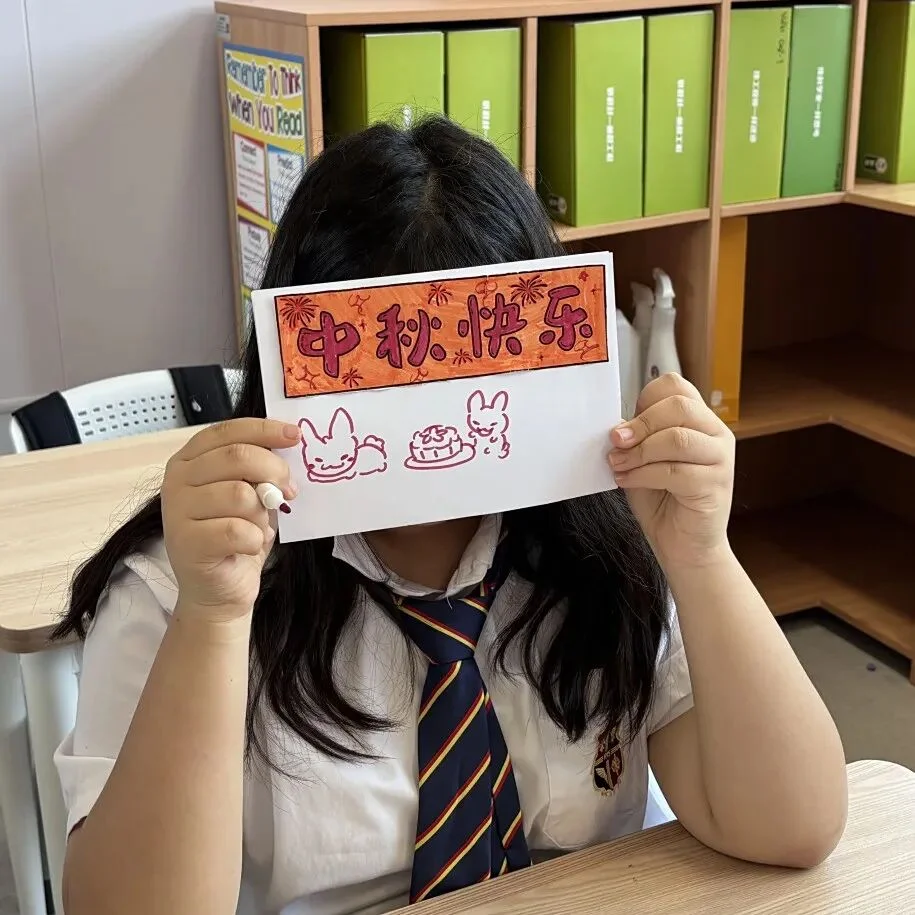
Jaeyun, from Korea, shared: “Mooncakes taste a bit like the songpyeon my mom makes. Eating them here reminds me of home, just like Chuseok does.”
With teacher guidance, the message became clear: “Different festivals may have different foods, but the feelings of caring for family and longing for something better are universal.”
Students nodded in agreement—“reunion” was no longer something unique to China, but a cross-cultural emotional resonance. This is the deeper meaning of Experience China: using culture as a bridge to foster understanding.
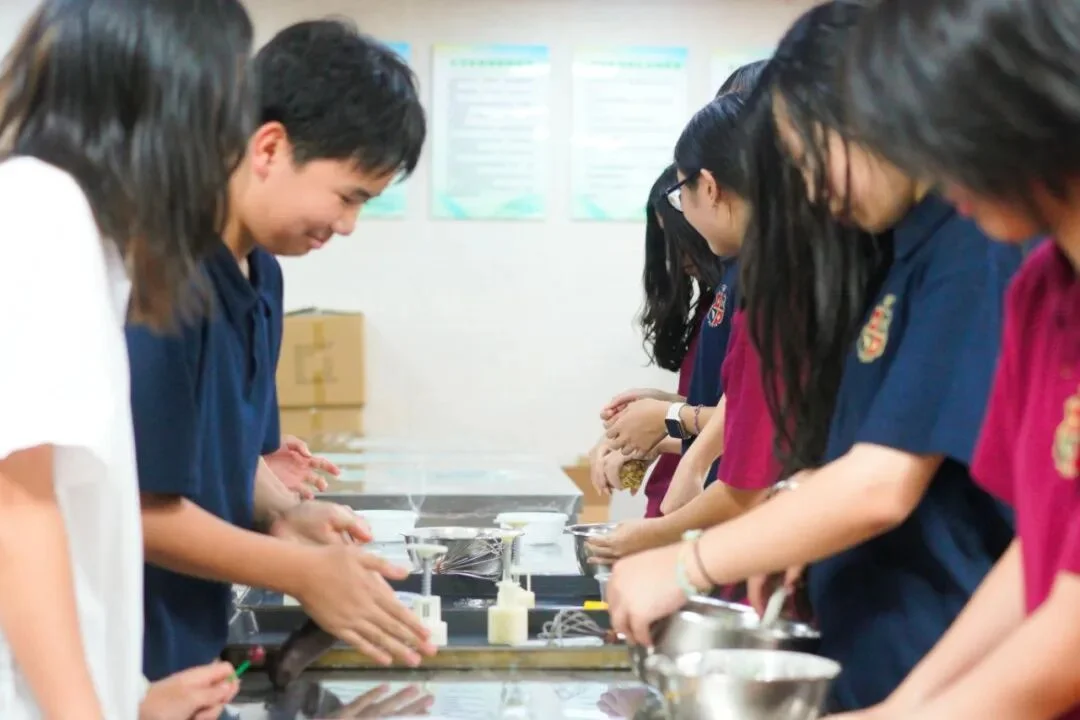
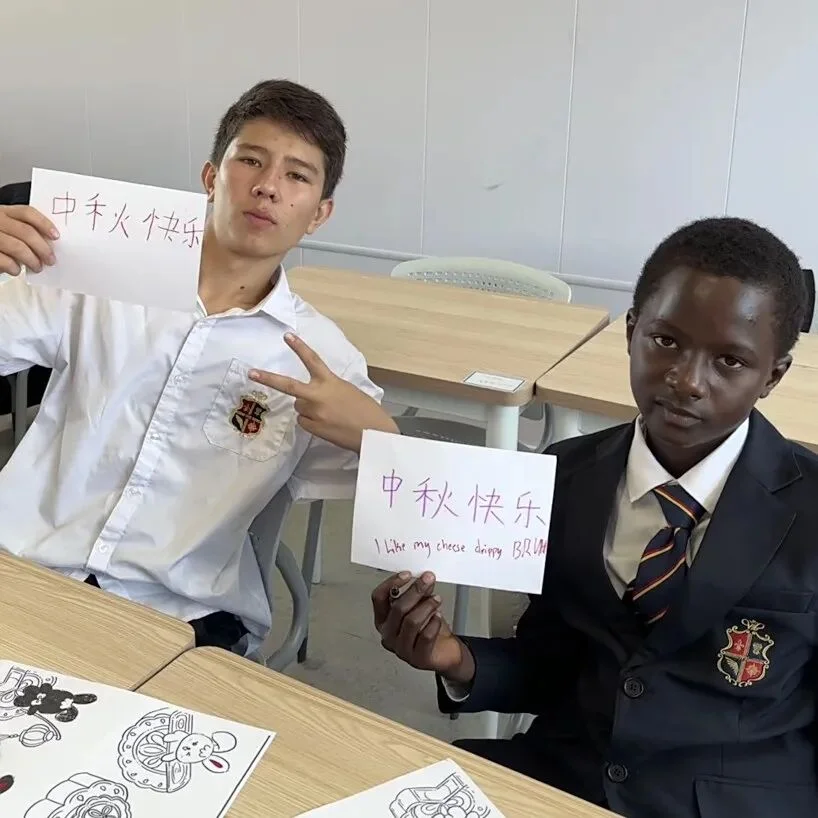
As the course concluded, students held up their self-made mooncakes and greeting cards, their eyes sparkling with anticipation. “Can we learn to make Chinese New Year food next time?” one of them asked eagerly. This simple question, brimming with a genuine desire to delve deeper, stands as the most meaningful testament to the course’s success.
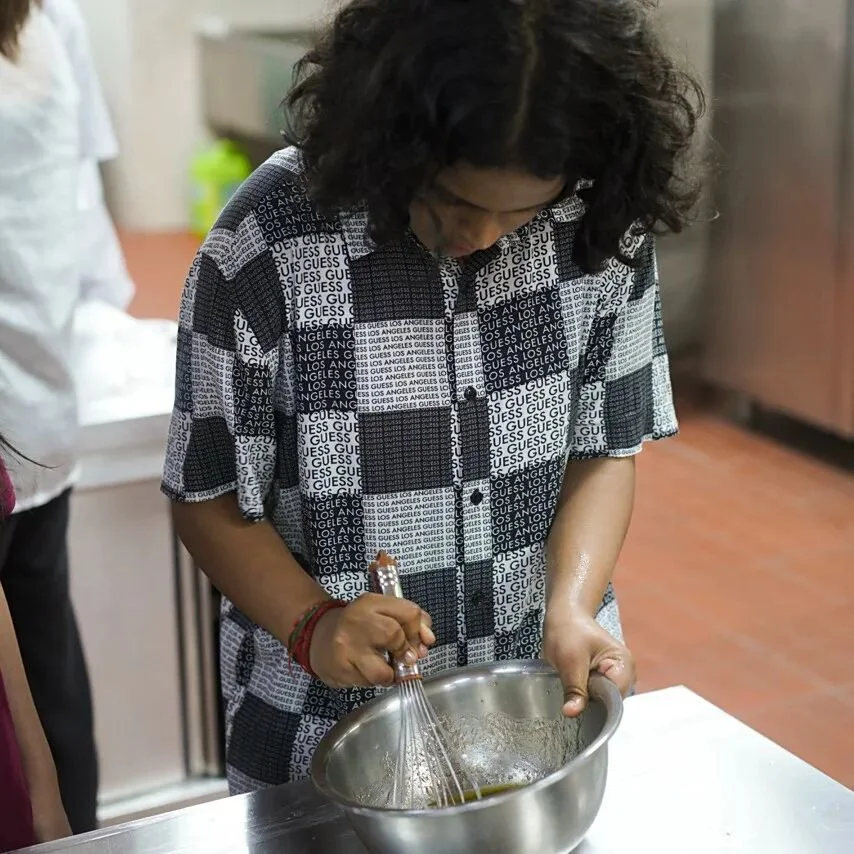
The Mid-Autumn “moon” was not merely learned about, but personally shaped by their hands. In this process, the seeds of culture were sown at their fingertips. With time and continued exploration, we trust these seeds will grow and flourish—branching out into a global mindset, while remaining deeply rooted in the rich soil of Chinese heritage.