


From Fields to Food and Nature: Hailiang’s Approach to Farm Education
 2026.11.4
Corn porridge, corn cake and popcorn provide three ways to look at one ingredient. In Hailiang Second Classroom’s agricultural-science course for Grades 3–7, food processing sits alongside farm work, agricultural technology and nature observation. For families comparing educational study tours, the design offers a specific question to consider: how much of agriculture does a child encounter beyond the field itself?
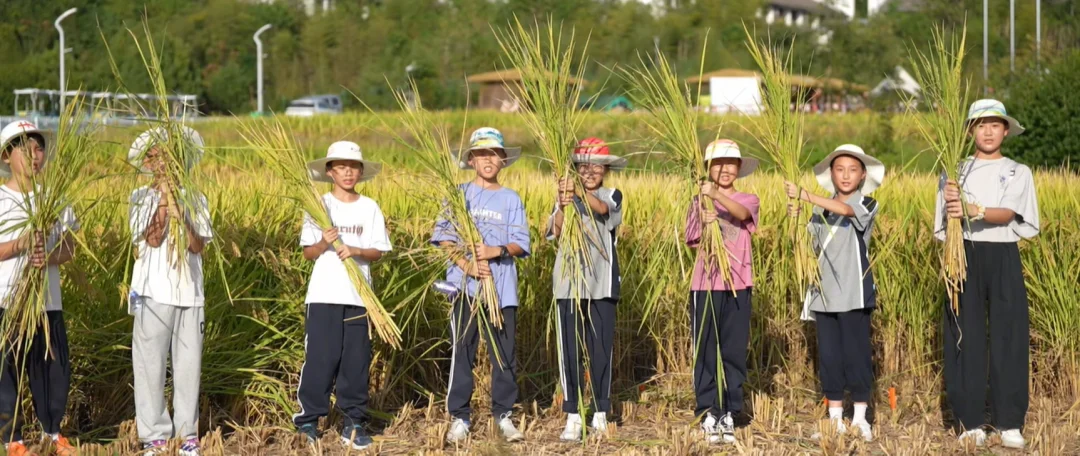
The course, Shao’er Nongkeyuan+, introduces farm education through four connected areas: a farm spanning traditional, modern and imagined future settings; an agricultural-products workshop; an agricultural research area; and a nature school. Its three thematic series cover grains, fruit and vegetables, and medicinal herbs.
The organising idea is a view of agriculture with several parts. Growing is connected with the work people do, the tools they use, the products they make and the environment around them. The course gives those relationships a structure that children can explore through knowledge-based learning and practical experience.
Farm Education Starts with More Than a Plant
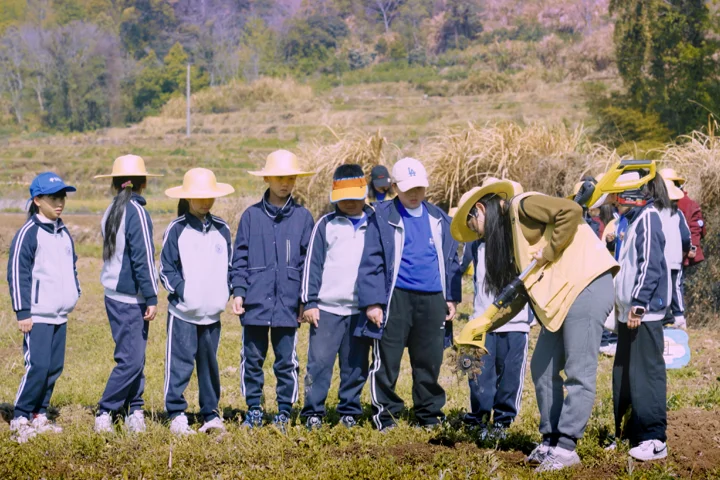
The farm area places three perspectives beside one another. The traditional setting emphasises physical effort. The modern setting introduces the convenience of technology. The future setting invites thinking about what agriculture might become.
This arrangement changes the question from simply identifying something growing to considering how people work with it. Effort, equipment and ideas about improvement become parts of the same subject. Children can encounter agriculture as a human activity that has different forms.
The time sequence also provides a basis for comparison. A traditional task and a modern tool belong to different approaches to work, while the future-facing element gives the theme an open direction. The course description connects these settings so that agricultural change can become part of the learning.
Following an Ingredient into the Workshop
The agricultural-products workshop extends the route beyond growing. It introduces different ways of processing the same ingredient, with corn porridge, corn cake and popcorn given as examples in the programme introduction.
The value of this grouping is the continuity of the ingredient. Three finished foods can be traced back to the same crop, while their different forms direct attention to processing. The relationship between field and everyday food becomes easier to recognise.
The workshop also places practical life skills beside the cultural meaning of agricultural products. Preparing or understanding a food product involves human choices and ways of living as well as the raw material. The course includes those dimensions within its description of agricultural learning.
This makes a familiar food a useful connection point for families. A child can begin with something recognisable and consider the work and processing behind it. The workshop belongs within the agricultural picture because it continues the story of the crop after the field.
Looking at the Technology behind Production
The agricultural research area introduces crop breeding, agricultural machinery, pesticides and fertilisers as topics for inquiry. These subjects bring attention to the technologies involved in agricultural development.
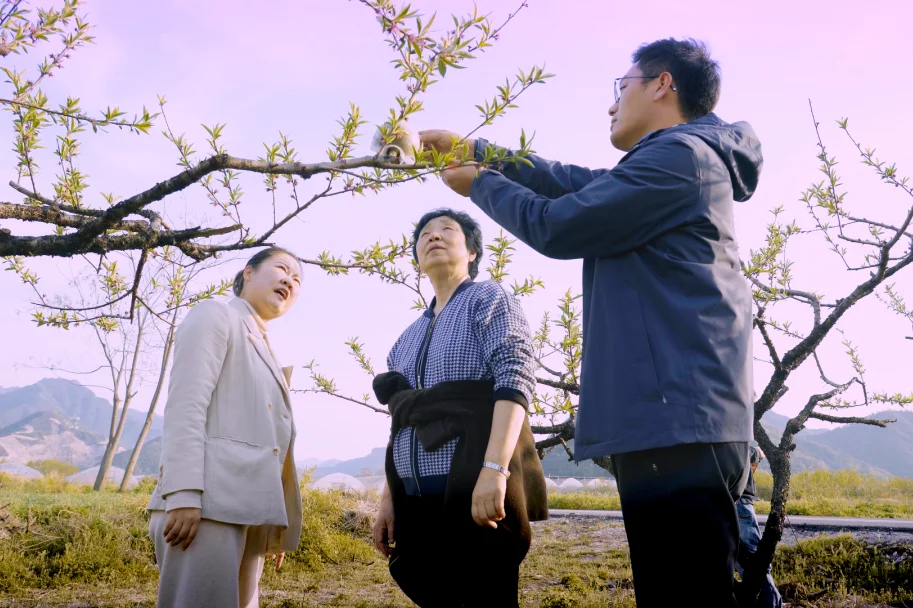
They also provide a different way to read the work encountered on the farm. A machine is connected with how a task is carried out. Breeding concerns the crops being developed. The other research topics extend the discussion to materials used in production. Each belongs to an explanation of how agriculture is organised.
For the course’s Grade 3–7 audience, the framework places these questions inside a concrete agricultural theme. The field supplies the setting, while the research area gives students a route into the technology behind what happens there.
Families exploring an international school in China can use such a framework as one example when thinking about practical learning. The course discussed here is introduced by Hailiang Second Classroom; its agricultural design is the case being examined.
Placing the Farm within Nature
The nature-school area adds observation of the environment to the picture. Its topics include ecology, astronomy and weather, with water-quality testing and observing the night sky illustrated in the introduction.
These topics extend the setting in which agriculture can be understood. The field is part of a surrounding environment, while weather and observation introduce things that do not sit neatly inside a single growing task. The course therefore opens a route from work on the ground to questions about the wider natural world.
Three Crop Series, Four Ways of Looking
Grains, fruit and vegetables, and medicinal herbs provide the programme’s thematic series. The four areas provide the settings through which an agricultural subject can be approached. These are two different organising layers: one identifies the theme, while the other identifies perspectives within it.
A grain theme, for example, belongs to a framework that includes production, processing, technology and nature. The corn-food examples make the processing connection explicit. The broader structure shows how an ingredient can remain recognisable as the course moves between different questions.
That continuity matters when families look at the range of school activities at HIS or consider practical learning more generally. The important design question is how activities relate to one another. A common theme can make the relationship between separate experiences easier to follow.
What a Family Can Look for in an Agricultural Course
The programme’s four areas offer a useful way to read a course outline. Does it show only the growing stage, or does it include what happens to agricultural products afterwards? Are technologies part of the explanation? Is the surrounding environment included in what children are asked to observe?
In this case, those perspectives are built into the announced structure. Its knowledge-and-experience design also recognises that practical participation and understanding have different roles. The course is intended to connect them through a shared agricultural subject.
The resulting view is broader than a list of things to do on a farm. It follows relationships between crops, human work, useful products, technology and nature. That is the particular contribution this farm education design makes to a conversation about children’s learning.
Families seeking information about Hailiang International School itself can contact HIS. The Second Classroom course provides the wider Hailiang education case discussed in this article.
FAQ
Which grades is the agricultural-science course designed for?
Hailiang Second Classroom’s introduction identifies Grades 3–7 as its intended audience.
What are its four main areas?
They cover farming across traditional, modern and future settings, agricultural-products processing, agricultural science and technology, and observation of nature.
Which agricultural themes does it use?
The three series are grains, fruit and vegetables, and medicinal herbs. They provide themes for connecting knowledge-based learning with practical experience.