


Beat, Rest and Starting Again: Karina on Student Motivation at Hailiang
 2026.11.3
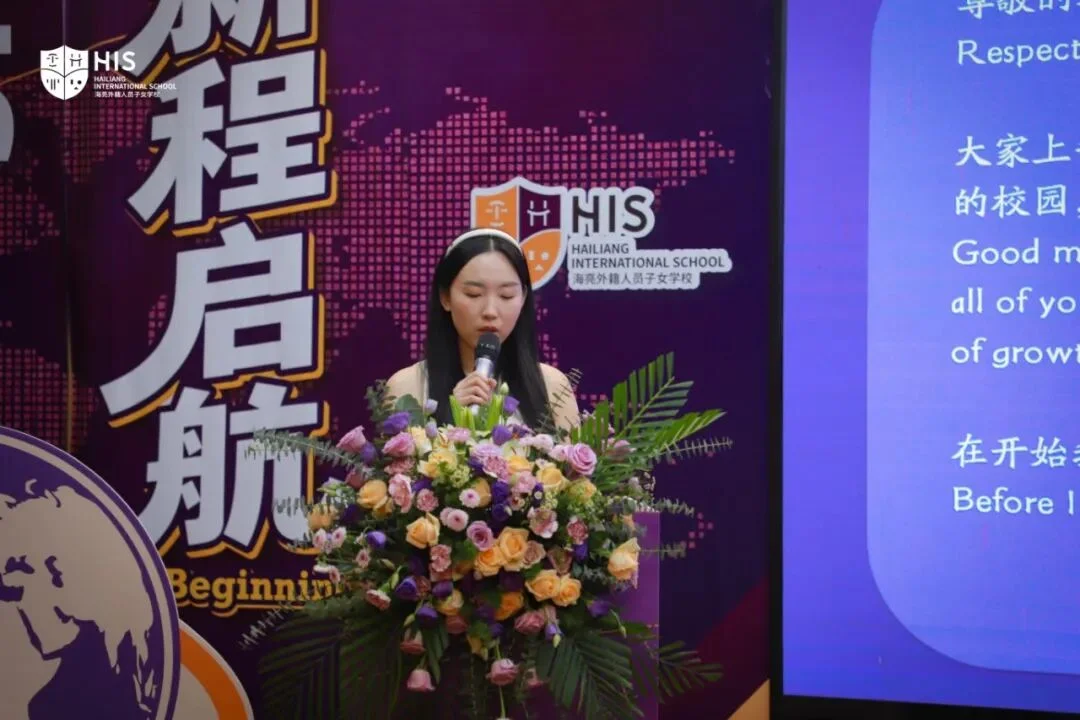
At the beginning of a new semester, Karina offered students at Hailiang International School two words from music: beat and rest. One gave her a way to discuss the pace of personal progress. The other encouraged students to pause, recover their energy and continue. Together, they formed her message about student motivation when learning feels uneven.
“The person you should strive to surpass is your past self, not your peers around you,” the HIS music teacher said. She placed students’ attention on their own development as they returned to campus or entered an unfamiliar environment.
A Personal Beat Changes the Point of Comparison
Karina described students as following their own rhythms. Some made faster progress, others advanced more slowly. Her emphasis was on moving forward steadily and finding a pace connected with the learner’s own development.
That changes what comparison is used for. Looking only at another student’s speed places attention on the distance between two people. Looking back at one’s earlier self places attention on what has changed within the same person.
For families considering an international school in China, this part of the address reveals a teacher’s language of encouragement. Karina recognised differences in pace while asking students to keep developing, rather than turning the welcome into a comparison between those already ahead and those still finding their way.
Student Motivation Needs a Direction Beyond Speed
“What matters most is to follow your inner voice and move forward steadily,” she said. The two parts of that sentence belong together: a sense of personal direction and continued movement. Speed alone could not express everything she wanted students to consider.
Her wider address encouraged students to develop their strengths instead of copying other people’s paths. In this context, finding a personal rhythm also meant paying attention to what kind of development they were pursuing. The question was how to continue along a meaningful path as an individual learner.
This gives the beat metaphor a practical role within her speech. It brings together differences in pace, recognition of personal strengths and the intention to keep going. A student’s next step remains important even when it does not look identical to a classmate’s.
A Rest Makes Continuing Part of the Picture
Karina’s second word was rest. She drew on the idea of a pause within a musical score to discuss moments when students felt physically or mentally tired. Her suggestion was to take appropriate time to recharge and then move forward again.
“A short pause is not equivalent to giving up,” she told them. The intention to return is central to that statement. Rest had a place within the continuing journey she was describing.
The musical image helped connect stillness with movement. A pause could be understood within a larger piece, just as a period of recovery could sit within a student’s longer development. Her language left room for effort and restoration in the same account of progress.
Keeping One Setback in Proportion
Karina then asked students not to doubt themselves because of a single setback. She reminded them that their journey of growth was still unfolding. This added a perspective on time to her ideas about pace and pauses.
A setback belongs to a particular moment. Her address placed that moment inside a longer story that still had room to develop. That is the connection between her advice about a rest and her encouragement to begin again: neither a pause nor a difficulty had to define the whole journey.
The wider setting for that participation includes school life at HIS. Karina’s own words remained close to the students she was addressing: move forward steadily, make room for a pause when tired and allow a single setback to remain one part of an unfolding experience.
How the Two Musical Ideas Work Together
Beat and rest addressed different moments in the same learning journey. One concerned how students recognised movement; the other concerned how they could pause without losing the possibility of returning. Her comments about setbacks connected both ideas with the longer view.
- When another learner seemed to move faster, her reference point was the student’s own earlier self.
- When deciding how to move forward, she encouraged attention to personal strengths and steady development.
- When feeling tired, she made space for an appropriate pause and renewed energy.
- After a setback, she asked students to keep their continuing growth in view.
These ideas make her message more specific than simply asking students to be confident. They address the comparison, tiredness and disappointment that can enter a learner’s thinking, while returning to the possibility of a next step.
Encouragement within a School Community
Karina began by welcoming new students and those returning to campus. She recognised that newcomers could be curious about their surroundings and could encounter challenges. Her welcome offered the reassurance of teachers and classmates as they began that transition.
That setting matters to the message about student motivation. A personal rhythm was being discussed within a community of different learners. Students were hearing that they had a place in the new semester while being encouraged to develop their own strengths.
Families with practical questions about the school can read the HIS student and family information. Karina’s speech adds a teacher’s perspective to that wider context: she wanted students to keep a sense of possibility as they encountered different speeds, pauses and new beginnings.
She ended by saying that she treasured seeing students shine and would be there to cheer them on. The closing returned her musical language to a personal relationship between teacher and students, with encouragement extending into the school year ahead.
Families considering joining the school can contact the HIS admissions team. Her address offers a clear starting point for discussing how a school talks with students about progress, challenge and continuing to learn.
FAQ
What did Karina mean by a student’s own beat?
She used beat as an image for personal pace. Her advice was to move forward steadily and compare progress with one’s own earlier self, rather than only with peers.
What role did rest have in her message?
She encouraged students who felt tired to take appropriate time to recharge and continue. The musical rest helped her explain a pause as part of an ongoing journey.
How did she address setbacks?
Karina asked students not to doubt themselves because of one setback. She reminded them that their growth was still unfolding and that there was more of their story to write.