


Different Voices, Shared Music: Karina on Music Education at Hailiang
 2026.10.28
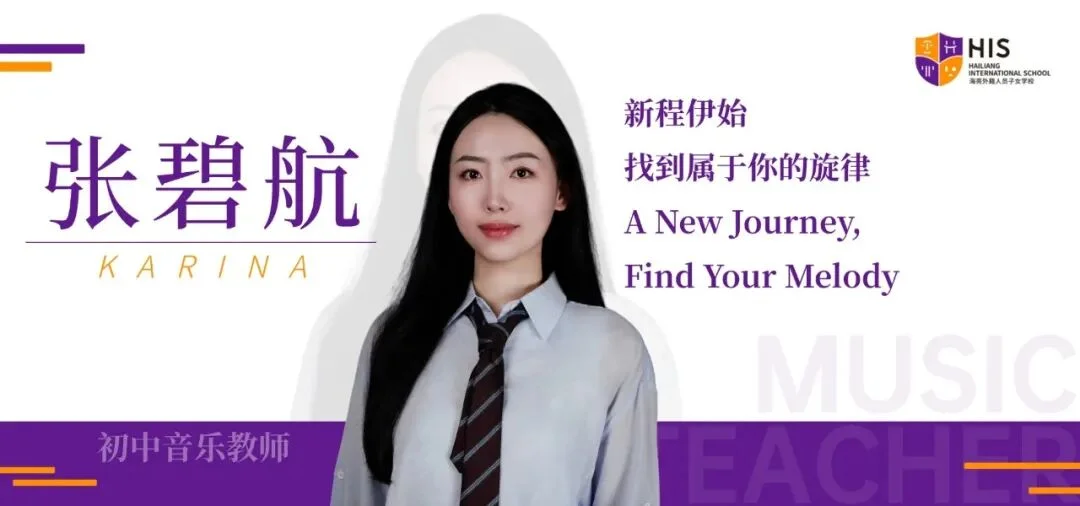
Karina began her new-semester address with a short video featuring “Ode to Joy” from Beethoven’s Symphony No. 9. She drew attention to the way distinct instruments could listen and sound together. For families considering an international school in China, her speech offers a music teacher’s perspective on a question that extends beyond performance: how can a student develop an individual voice while contributing to a community?
The Hailiang International School teacher used music education as a starting point for discussing individuality, listening and respect. She welcomed new students and those returning to campus, then compared the school community with an orchestra whose strength came from its different voices.
“Yet the true charm of music comes from every distinct voice,” she told the students. The sentence placed the character of each contribution alongside the performing skills people often notice first.
What a Distinct Voice Adds to Music Education
Karina acknowledged that many students associate musical competition with technique. Her response drew attention to another feature of an orchestra: each instrument has its own tone. The sound of the whole depends on the presence of those differences.
Her comparison gives individuality a specific meaning. An instrument contributes something recognisable through its particular sound. The point is not simply that every participant should stand out; it is that different contributions make a shared piece possible.
She carried that idea into learning. Students, she said, did not need to copy one another’s paths of growth. They could develop their own strengths. This connection between musical tone and personal strengths was the centre of her message about finding a melody of one’s own.
Listening Gives Individuality a Shared Context
The video also mattered because Karina described instruments listening to one another under a conductor’s guidance. Her image combined difference with attention. Each part retained its character while responding within something larger.
That makes listening central to the comparison. Developing a voice involves more than deciding what one wants to express. A shared performance also involves noticing other contributions and recognising that one’s own part exists alongside them.
Applied to school life, the image connects personal expression with respect. Karina associated her message with diversity, inclusiveness and respect: students could value their own characteristics while recognising the place of others. The two responsibilities belonged together in her account.
The school’s page on music and student activities at HIS offers related reading for families interested in the wider setting. Karina’s address focused on the idea behind participation: an individual voice can contribute to a shared experience.
Why Copying Another Student’s Path Misses the Point
“We do not need to copy others’ paths of growth,” Karina said. It was a direct extension of her observation about instruments with different tones. The features that distinguish one contribution from another were worth developing.
Her reference to growth also gives the advice a broader scope than a single performance. Karina was inviting students to consider how they approached their studies and recognised their strengths. Her encouragement concerned the direction of their development as well as how they appeared on a stage.
A comparison based only on another person’s visible success can overlook that question of fit. Within Karina’s metaphor, the useful starting point is the contribution a student can develop, together with the attention needed to work alongside others. Her musical image makes both parts of that invitation understandable.
This is particularly relevant to a welcome at the beginning of a semester. Students were arriving with different experiences, while those returning were beginning another stage of their school lives. Her address gave them a shared image without requiring them to have the same starting point.
A Welcome with Room for New and Returning Students
Karina addressed both groups explicitly. She welcomed newcomers into the HIS community and welcomed returning students back with the experiences they brought with them. She described the semester ahead as a musical movement still waiting to be written together.
The image left space for participation. A new semester was presented as something students would help shape through their presence and contributions. In the context of the earlier orchestra comparison, joining the community meant bringing a voice into the group.
She also recognised that a new environment could bring curiosity and challenges. Her welcome offered encouragement from a teacher speaking to students at a moment of transition. It connected the larger language of belonging with the immediate act of greeting those who were just arriving.
Her reference to music classes and school stage events also connects the address with school activities at HIS. She spoke as a teacher students might already know from those settings, carrying the language of music into a welcome for the whole community.
Questions the Speech Opens for Families
For families thinking about music education, the address offers a perspective on what a teacher chooses to value. Technique remains part of the conversation, while distinct expression, listening and respect receive attention too. The result is a broader discussion of contribution.
Questions prompted by Karina’s words include how a child’s strengths are recognised, how students learn to listen to other voices and how participation allows different contributions to be heard. These are questions about the experience of learning together, grounded in the relationships her metaphor describes.
At the end of her speech, Karina spoke about the moments she treasured as a music teacher: seeing students shine. Her wish that they find their own melody brought the address back to the individual within the community, with a teacher ready to cheer them on.
Families who would like to discuss the school can contact HIS. Karina’s message provides a starting point for a conversation about expression, participation and the place of music in a student’s school experience.
FAQ
What did Karina use to introduce her message?
She showed a short video featuring “Ode to Joy” from Beethoven’s Symphony No. 9, then used an orchestra’s distinct sounds and shared performance as an image for the school community.
How did she connect music with individuality?
Karina compared each instrument’s particular tone with a student’s strengths. She encouraged students to develop their own characteristics while listening to and respecting others.
Who was her welcome addressed to?
She welcomed both new students and those returning to HIS, inviting them to begin the semester as different individuals contributing to a shared community.