


Authentic Assessment: How Schools Turn Experience into Evidence of Student Growth
 2026.8.20
A student returns from a field experience with hundreds of photographs.
But what did the student actually learn?
Another student visits a company, completes an interview and participates in a group project.
How should a school evaluate that experience?
These questions matter because experiential education becomes meaningful only when student growth can be observed, documented and used to guide future learning.
For families choosing where to study in China, this is also an important way to distinguish between schools that simply offer activities and schools that have built a genuine educational system around them.
Hailiang Practical Education’s answer is to connect practical learning with structured curriculum design, evidence of learning, student portfolios, performance-based assessment and clear implementation standards.
Quick Answer: What Is Authentic Assessment?
Authentic assessment evaluates what students can understand, apply, create and communicate through meaningful tasks.
Instead of relying only on traditional tests, students may demonstrate learning through:
research reports;
presentations;
investigations;
portfolios;
prototypes;
creative works;
exhibitions;
interviews;
collaborative projects;
solutions to real problems.
The central question changes from:
“Can the student remember the correct answer?”
to:
“Can the student use what they have learned?”
That makes authentic assessment in education particularly valuable when learning happens outside traditional classroom settings.
Why Experiential Education Needs a Different Kind of Assessment
Traditional tests are efficient for measuring certain forms of knowledge.
But a practical course often aims to develop more.
Students may need to identify problems.
Collect information.
Work with others.
Revise ideas.
Communicate with a real audience.
Transfer knowledge between subjects.
Respond when the original plan fails.
These forms of learning cannot always be captured by a multiple-choice examination.
This creates a challenge for experiential education.
If schools only evaluate what is easy to test, some of the most valuable parts of practical learning become invisible.
That is why experiential learning assessment needs to examine both outcomes and processes.
A Photograph Is a Memory. A Learning Product Is Evidence.
Students often return from an educational journey with photographs, souvenirs and personal impressions.
These can be meaningful.
But they do not necessarily show what the student has learned.
A stronger practical course asks students to produce evidence.
That evidence might be:
a research report based on interviews;
a redesigned solution to a community problem;
a science investigation;
a documentary;
a prototype;
a public exhibition;
a presentation to an authentic audience;
a reflective analysis;
or an action proposal addressing a real issue.
These products make learning visible.
They allow students, teachers and families to see how experience has been transformed into understanding.
Performance-Based Assessment Asks Students to Use Knowledge
Performance-based assessment focuses on what students can do with what they know.
Instead of selecting an answer from a list, students may need to demonstrate understanding through a task.
For example:
A student studying environmental science may analyze a local ecological problem and propose an intervention.
A student investigating cultural heritage may interview community members and create a preservation proposal.
A group exploring engineering may design, test and revise a model.
Students studying communication may prepare findings for a real audience rather than simply submit answers to a teacher.
These tasks resemble the way knowledge is used outside school.
That is what makes them useful for evaluating real-world skills for students.
Assessment Should Look at the Process, Not Only the Final Product
Imagine two student groups produce equally strong presentations.
The final products look similar.
But their learning processes may have been completely different.
One group may have identified a problem independently, divided responsibilities effectively, tested several ideas and revised the project after discovering flaws.
The other may have followed instructions with little independent thinking.
If assessment only examines the final presentation, this difference disappears.
A richer model also considers:
How did students define the problem?
What questions did they ask?
How did they collect evidence?
How did they collaborate?
How did they respond to disagreement?
How did they revise their ideas?
What did they learn from failure?
How did their understanding change?
This is why authentic assessment often combines final outcomes with observation, reflection and documentation.
The Student Learning Portfolio Creates a Longer View of Growth
One project shows what a student accomplished once.
A portfolio can show how the student develops over time.
A student learning portfolio may include early ideas, research notes, drafts, teacher feedback, revised work, reflections, photographs of practical tasks and final outcomes.
This creates a visible learning trajectory.
Students can compare:
Where did I begin?
What was difficult?
What feedback did I receive?
What did I change?
What can I do now that I could not do before?
This is more than archiving schoolwork.
Done well, a portfolio becomes part of the learning process itself.
Students begin to observe their own development.
Teachers gain richer evidence for future teaching.
Families gain a clearer picture of progress than a single score can provide.
Student Learning Outcomes Should Be Defined Before the Activity Begins
Assessment becomes weak when schools decide what to evaluate only after an activity is finished.
Strong practical education begins with expected student learning outcomes.
Before designing the experience, educators should decide what students are expected to develop.
Knowledge?
Inquiry?
Communication?
Collaboration?
Problem-solving?
Creativity?
Reflection?
Application across disciplines?
Once these outcomes are clear, educators can design activities that produce relevant evidence.
The logic becomes:
learning objective → experience → student task → evidence → assessment → reflection
That is much stronger than:
destination → activity → photographs → finished
From One Experience to Holistic Student Development
Some of the most important outcomes of practical education develop slowly.
Confidence.
Responsibility.
Curiosity.
Communication.
Collaboration.
Resilience.
Independent thinking.
The ability to connect knowledge across disciplines.
These qualities contribute to holistic student development, but they should not become vague slogans.
Schools need to identify the behaviors through which such development can be observed.
For example, collaboration can be examined through how students allocate roles, resolve disagreements and contribute to group work.
Problem-solving can be observed through the way students define a challenge, test alternatives and revise a solution.
Reflection can be evaluated through the student’s ability to explain how their thinking changed.
The broader the educational goal, the more carefully the evidence needs to be defined.
Community-Based Learning Expands the Sources of Education
Practical education naturally connects schools with society.
A school cannot independently reproduce every professional, cultural, scientific and social environment students may benefit from encountering.
Communities can provide real issues.
Museums can provide cultural resources.
Companies can provide professional contexts.
Universities can provide specialist expertise.
Natural environments can provide research settings.
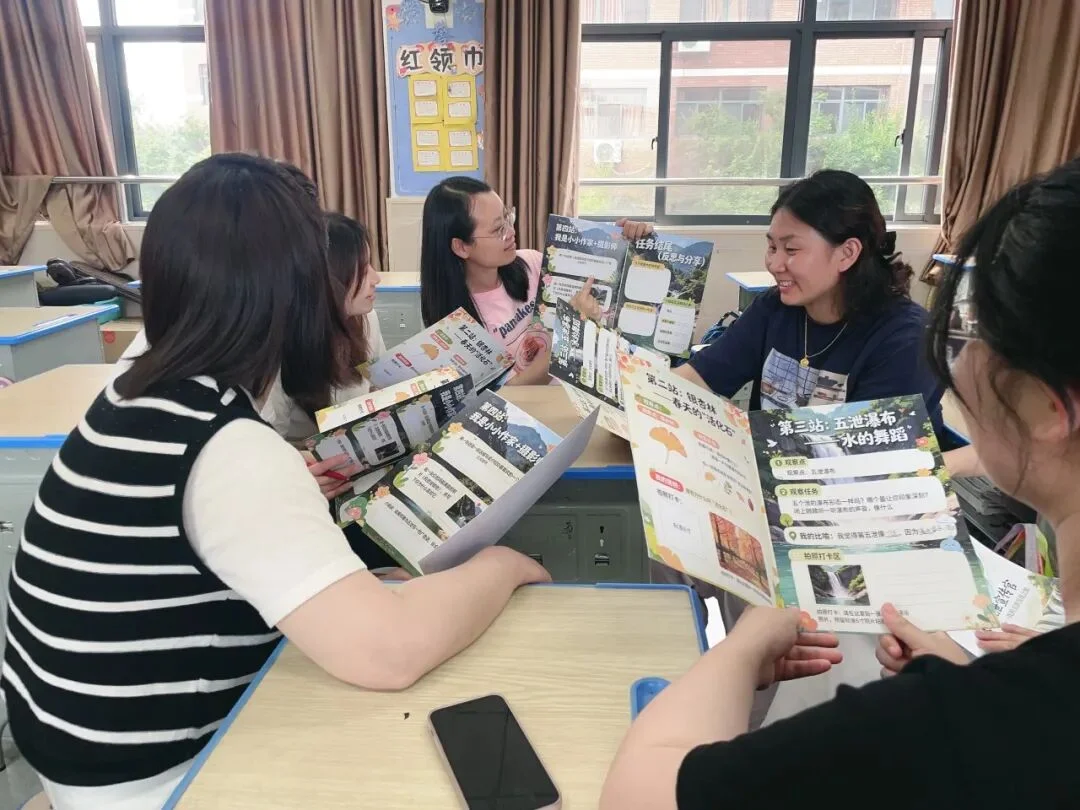
This is why community-based learning can greatly expand the learning opportunities available to students.
But access to external resources is only the beginning.
Schools remain responsible for determining how those resources serve educational goals.
Why Community Partnerships in Education Need School Leadership
Effective community partnerships in education do not mean outsourcing education.
External partners can contribute expertise, locations and resources.
But the school should retain educational leadership.
Schools need to determine:
why a particular partner is involved;
what students are expected to learn;
how activities connect with curriculum;
what tasks students will complete;
how learning will be evaluated;
and how safety and responsibility will be managed.
The strongest model is therefore not “school activity plus outside provider.”
It is curriculum co-creation.
The school leads educational purpose.
Teachers lead learning.
Families provide support.
Social partners contribute authentic resources.
Students engage with the resulting learning environment.
Teachers Turn Social Resources into Curriculum
A factory can be visited.
A scientist can give a presentation.
A museum can provide an exhibition.
A community can provide stories.
But teachers make these resources educational.
They identify the questions worth asking.
They select what students need to know beforehand.
They design tasks.
They guide discussion.
They notice when students need support.
They connect experience back to disciplinary knowledge.
They evaluate what students have learned.
In this sense, teachers are curriculum designers connecting school with the real world.
This role becomes even more important as practical education expands.
The larger the learning environment becomes, the clearer the educational direction must be.
Safety Is Part of Educational Quality
Experiential education takes place in open, dynamic and sometimes unfamiliar environments.
That creates educational opportunities.
It also creates responsibility.
Hailiang Practical Education’s framework therefore treats travel and implementation safeguards as part of the system rather than as an administrative detail.
A structured approach includes:
resource review;
route inspection;
risk assessment;
clear responsibilities;
process management;
family-school communication;
and emergency response procedures.
Safety should not be positioned against innovation.
Good systems make responsible innovation possible.
When responsibilities are clear and procedures are established, educators can focus more effectively on learning.
The Learning Space Can Expand. Responsibility Cannot Be Outsourced.
This principle is especially important.
A practical course may happen in nature.
A community.
A museum.
A company.
A university.
Or another city.
But the school’s responsibility for educational quality does not disappear when students leave campus.
Schools should still oversee:
resource selection;
curriculum design;
student preparation;
implementation;
assessment;
and safeguarding.
The location changes.
The educational responsibility remains.
That is one of the differences between an educational system and a collection of activities.
Building Institutional Memory
Practical education creates knowledge not only for students, but also for schools.
Every course teaches educators something.
Which questions worked?
Which tasks produced genuine inquiry?
Which resources were valuable?
Where did students struggle?
What should be redesigned?
Which assessment criteria were useful?
If this information remains only in an individual teacher’s memory, the school has to reinvent the course every time.
If it is documented, the school can gradually build:
a curriculum resource library;
a student outcome library;
an assessment framework;
a case database;
a partner network;
and implementation standards.
This is how practical education becomes sustainable.
From Individual Projects to a Reusable System
The publication of the Hailiang Practical Education White Paper represents this larger goal.
Rather than treating successful activities as isolated examples, the framework organizes practical education around four connected areas:
Top-Level Design — defining educational purpose.
Curriculum Development — turning real-world resources into learning experiences.
Outcome Documentation — making student development visible.
Travel and Implementation — making experiences safe and sustainable.
Together, these elements create a closed loop from educational goals to curriculum, implementation, assessment and improvement.
That is what allows practical education to move from “doing activities” to “building a system.”
What Should International Families Ask a School?
When families are considering an international school in China, extracurricular activity lists can look impressive.
But numbers alone reveal very little about educational quality.
Instead, ask:
What does the school expect students to learn from practical experiences?
There should be more than participation.
How is student growth documented?
Look for portfolios, projects, presentations, reflections and other learning evidence.
Are students assessed only on final products?
High-quality assessment should also recognize process, collaboration, inquiry and revision.
Who designs the learning experience?
Teachers should play a central educational role.
How are outside partners selected?
Resources should serve curriculum goals, not the other way around.
How does the school manage safety?
Risk management should be planned rather than improvised.
What happens to successful courses afterward?
Strong schools document and improve them.
Families interested in experiencing learning in China over a shorter period can also explore the HIS Study Tour Program.
Experience Becomes Education When Growth Becomes Visible
Practical education should leave students with more than memories.
It should leave evidence of new understanding.
A question they learned to investigate.
A problem they learned to solve.
A project they learned to revise.
A team they learned to work with.
A perspective they had not considered before.
A piece of work that demonstrates what they can now do.
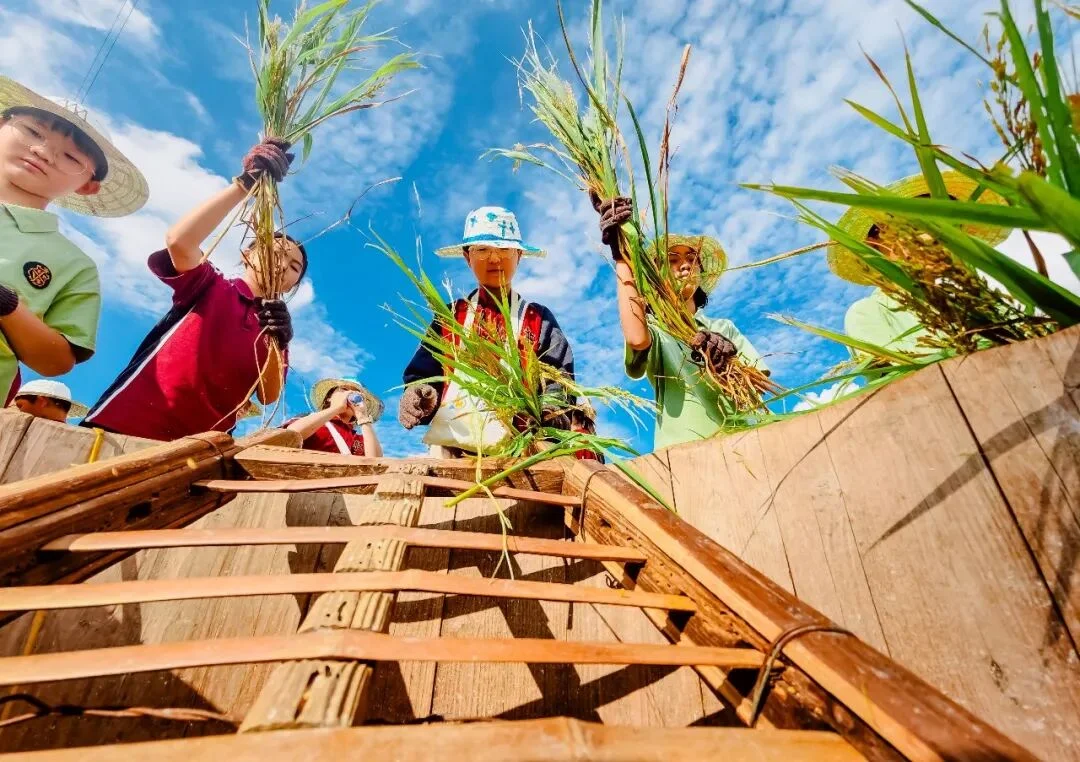
These are the outcomes that transform real-world learning experiences into education.
The long-term value of Hailiang’s practical education system lies not simply in opening more learning spaces.
It lies in connecting those spaces to clear educational goals, teacher-designed curriculum, evidence of learning and institutional improvement.
For families considering study in China, that distinction is worth paying attention to.
A good educational experience takes students somewhere new.
A strong educational system helps them return changed—and can show how they have grown.
Popular Search Questions
What is authentic assessment?
Authentic assessment asks students to demonstrate knowledge and skills through meaningful tasks such as investigations, projects, presentations, portfolios, performances or solutions to realistic problems.
What is authentic assessment in education?
It is an assessment approach that evaluates whether students can apply knowledge in meaningful contexts rather than relying exclusively on recall-based tests.
What is performance-based assessment?
Performance-based assessment requires students to demonstrate learning by completing a task, creating a product, solving a problem or presenting their understanding.
What is a student learning portfolio?
A student learning portfolio is a structured collection of work that documents progress over time. It can include drafts, completed projects, feedback, reflections and evidence of skill development.
How do schools conduct experiential learning assessment?
Schools can combine observations, student reflections, project outcomes, presentations, portfolios, peer collaboration evidence and clearly defined assessment rubrics.
Why are student learning outcomes important?
Student learning outcomes define what students should know, understand or be able to do after a learning experience. They help schools design activities and assessment around educational purpose rather than activity completion.
How do community partnerships in education help students?
They give students access to authentic settings, expertise and real problems while allowing schools to connect classroom knowledge with communities, organizations, cultural institutions and industry.
How can practical education develop real-world skills for students?
Well-designed practical learning can require students to communicate, collaborate, investigate, make decisions, solve problems, manage projects and apply academic knowledge in unfamiliar situations.
How should parents evaluate experiential programs when choosing a school in China?
Parents should ask about learning objectives, teacher involvement, assessment methods, student outcomes, partner selection, safety procedures and how each experience connects to the wider curriculum.
What is the difference between an educational trip and experiential learning?
An educational trip may expose students to a new place. Experiential learning adds structured preparation, student inquiry, meaningful tasks, reflection, assessment and application after the experience.