


Experiential Learning: How the Real World Becomes a Classroom
 2026.8.19
For international families choosing where to study in China, education is no longer defined only by what happens inside a classroom.
A museum can become a place for investigation. A company can become a setting for problem-solving. A community can become a source of research questions. A journey can become a structured learning experience.
But simply taking students outside school does not automatically create meaningful education.
The real question is this:
How can the real world become part of the curriculum?
That question lies at the heart of experiential learning—and of Hailiang’s growing approach to practical education.
Over the past year, Hailiang Practical Education has worked with more than 80 ecosystem partners, developed and delivered over 300 structured course solutions, and reached more than 45,000 student participants.
Behind those numbers is a larger shift: from organizing individual activities to building a systematic educational model.
Quick Answer: What Is Experiential Learning?
Experiential learning is an educational approach in which students learn through direct experience, active investigation, reflection and application.
Instead of only receiving knowledge from textbooks or lectures, students observe, question, experiment, interview, collaborate, create and solve problems in real contexts.
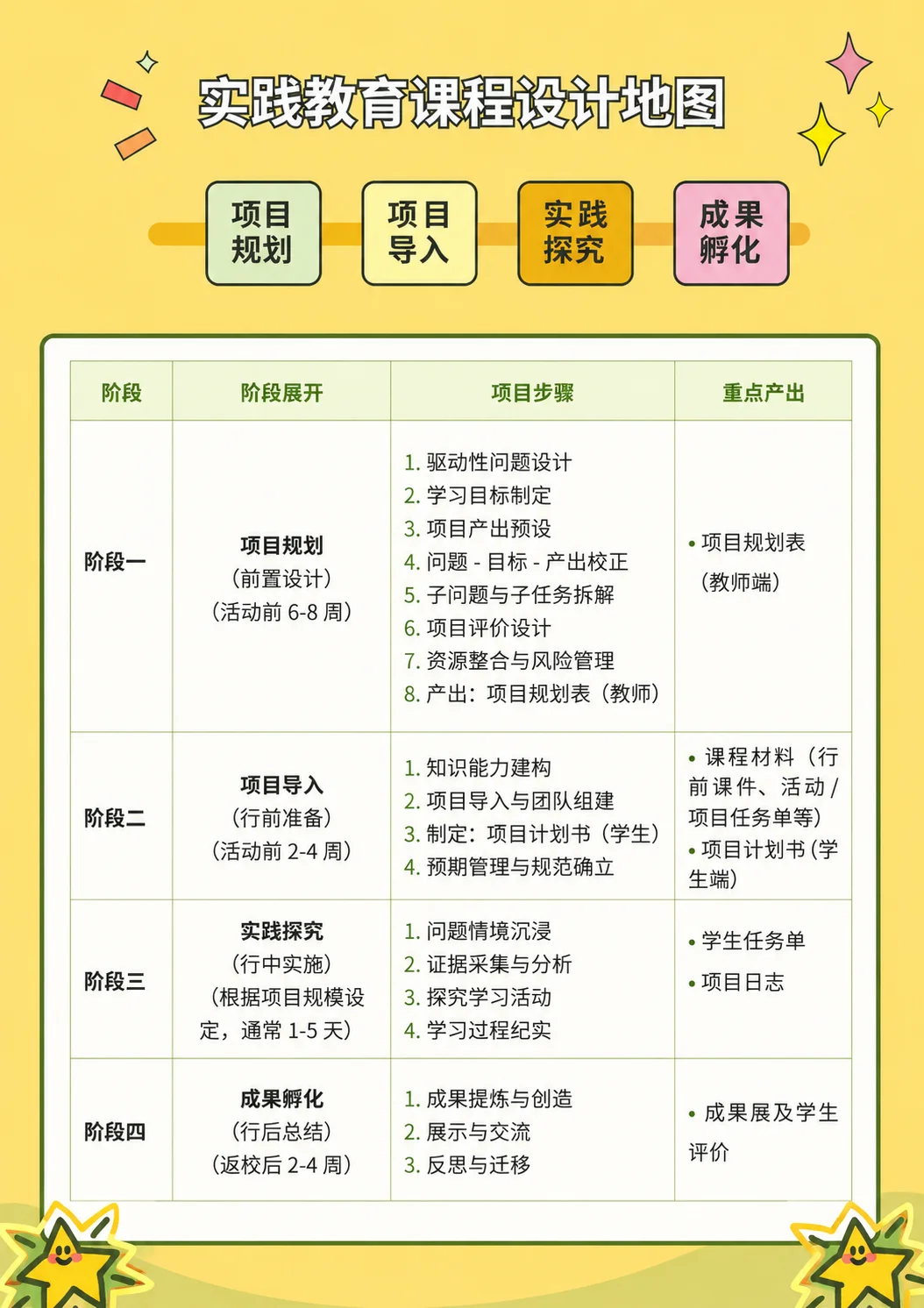
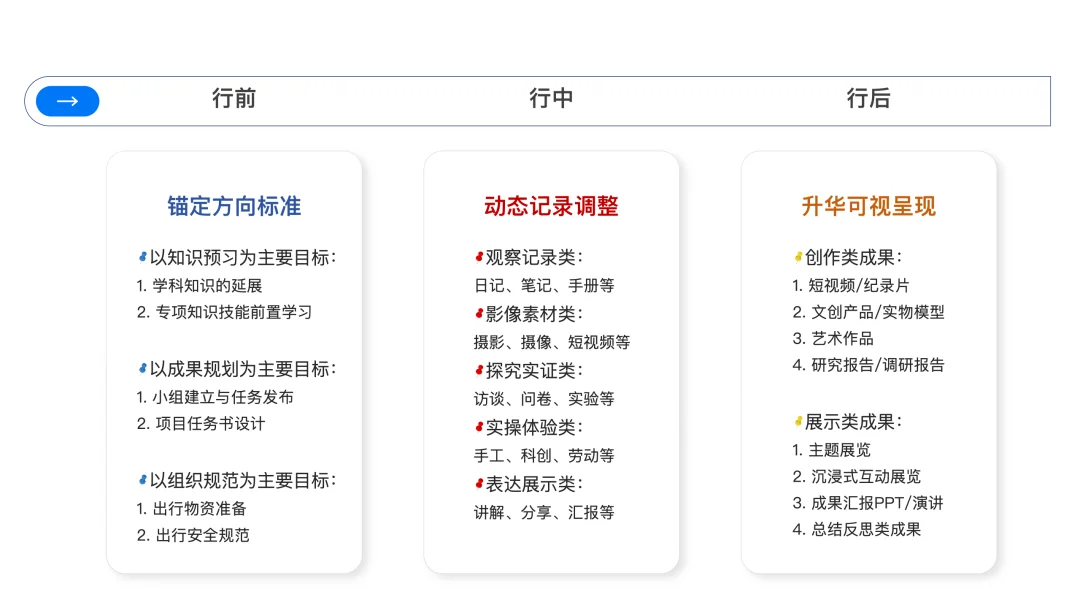
Effective experiential learning usually connects three stages:
Before the experience: students develop background knowledge and identify questions.
During the experience: students investigate, collect evidence and complete authentic tasks.
After the experience: students organize findings, create outcomes, reflect and apply what they have learned.
This is why learning beyond the classroom should be understood as curriculum design—not simply travel.
From One Activity to a Learning System
Many schools already organize visits, camps, field trips and educational tours.
The difficulty is not getting students out of school.
The difficulty is making sure that what happens outside school becomes part of the school’s educational system.
A venue is not automatically a course.
A company visit is not automatically experiential learning.
A travel route is not automatically a curriculum.
Social resources become educational resources only when teachers connect them with clear learning objectives, carefully designed tasks and meaningful assessment.
This distinction is particularly important for experiential learning in schools.
If practical education depends only on whichever resources happen to be available, students may receive many experiences but little continuity.
A systematic approach begins somewhere else:
What do we want students to develop?
What kinds of experiences can support those goals?
What knowledge should students bring into the experience?
What should they investigate?
What evidence of learning should they produce afterward?
Hailiang Practical Education’s framework starts with these questions.
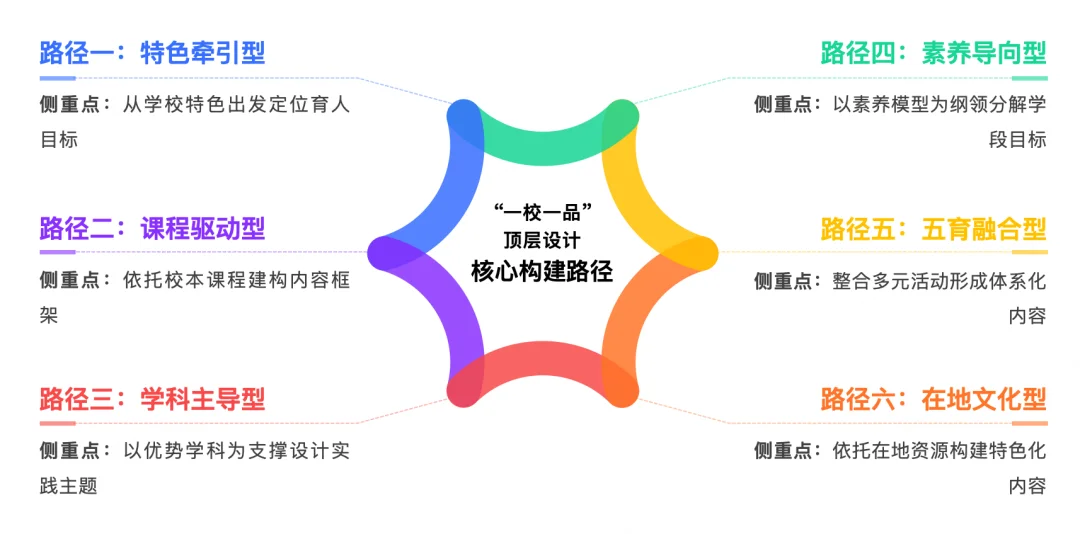
Step 1: Begin with Educational Goals, Not Destinations
One of the most important shifts in practical education is moving from:
“Where can we take students?”
to:
“What do we want students to learn?”
A strong experiential curriculum begins with the school’s educational philosophy, student development goals, age characteristics, local context and existing curriculum.
Only then should schools select external resources.
This changes the role of practical education.
Instead of being an occasional enrichment activity, it becomes part of a coherent learning pathway.
A science visit might support inquiry.
A cultural site might connect history, language and identity.
A company might become a setting for understanding technology, economics or sustainability.
A community investigation might develop observation, communication and problem-solving.
This is experiential learning designed backward from educational purpose.
Step 2: Prepare Students Before They Leave School
Successful experiential learning for students begins before the journey itself.
Students need enough background knowledge to recognize what matters when they encounter the real world.
Before a visit or field experience, teachers can introduce key concepts, relevant vocabulary and contextual information.
But preparation should go beyond memorizing facts.
Students also need a driving question.
For example:
Why do aircraft wings generate lift?
How does a community protect local cultural heritage?
How does a factory balance efficiency and environmental responsibility?
How does a museum decide which stories to preserve?
What makes an urban space work for different groups of people?
Questions transform students from visitors into investigators.
This is where experiential learning connects naturally with inquiry-based learning.
Students are no longer simply waiting to be told what to notice.
They have something to find out.
Step 3: Turn Observation into Investigation
During a high-quality experiential course, students should do more than listen to an explanation and take photographs.
They may observe.
Measure.
Experiment.
Interview.
Record.
Compare.
Discuss.
Design.
Test.
Revise.
Collaborate.
This is where hands-on learning becomes intellectually meaningful.
The activity itself is not the objective. The activity becomes a method for understanding something larger.
For example, HIS has already used Project-Based Learning in its aviation curriculum, where students can move from learning basic flight concepts to designing wind-tunnel experiments, exploring aviation technologies and refining aircraft models.
Students are not simply hearing about aviation.
They are investigating how it works.
Families interested in this type of learning can explore the HIS Commercial Aircraft Science Showcase, which demonstrates how practical investigation and project work can be integrated into a structured school curriculum.
Why Project-Based Learning Matters
Project-based learning and experiential learning overlap, but they are not identical.
Experiential learning emphasizes learning through experience and reflection.
Project-based learning organizes learning around a sustained question, challenge or problem that usually leads to a meaningful product or outcome.
When the two approaches work together, students do not simply “experience” something.
They use the experience to build knowledge and create something.
That is particularly valuable for project-based learning for students, a search area that is currently showing strong growth.
A student might investigate local architecture and create a preservation proposal.
Another group might study water quality and present recommendations.
Students might interview professionals, analyze information and design a solution to a real problem.
The learning moves from knowing to doing.
The Real World Creates Questions Textbooks Cannot Fully Reproduce
Classroom knowledge is essential.
But the real world contains complexity that is difficult to reproduce on a worksheet.
A textbook can explain an ecosystem.
A field investigation forces students to notice variation.
A lesson can explain communication.
An interview requires students to formulate questions and respond to unexpected answers.
A science diagram can show a principle.
An experiment forces students to confront what happens when their prediction is wrong.
These are authentic learning experiences because students work with situations that contain uncertainty, context and consequences.
That uncertainty is educationally valuable.
Students learn that real problems are rarely organized into neat chapters with answers printed at the back.
The Teacher Is the Bridge Between School and the Real World
Opening the school gates does not make teachers less important.
It makes their role more important.
External organizations can provide locations, expertise, equipment and real-world situations.
Teachers turn those resources into learning.
They decide:
What should students notice?
What should they investigate?
Which disciplines can be connected?
What task is appropriate for this age group?
When should teachers explain?
When should students discover?
How will students demonstrate what they have learned?
This is one of the central principles of experiential learning in education.
The real world provides the context.
Teachers provide educational direction.
One Experience Can Connect Multiple Subjects
The strongest practical courses often do not belong neatly to a single school subject.
Consider a study of a historic neighborhood.
Students may use:
History to understand how the area developed.
Geography to analyze location and spatial change.
Language to conduct interviews.
Mathematics to organize survey data.
Art to document architectural features.
Technology to produce digital maps or presentations.
Citizenship education to think about preservation and community needs.
This interdisciplinary structure is one reason real-world learning can be powerful.
Students begin to discover that knowledge is divided into school subjects for organizational convenience—but real problems rarely are.
Learning Does Not End When Students Return to Campus
One of the weakest versions of experiential education ends when the bus arrives back at school.
Students went somewhere.
They saw something.
They took photographs.
Then normal lessons resume.
A stronger model treats the return to school as another stage of learning.
Students should organize what they discovered.
They may compare evidence, test conclusions, complete reports, produce presentations, develop prototypes or rethink their original assumptions.
Reflection is crucial because experience alone does not guarantee understanding.
Students need to ask:
What did I notice?
What surprised me?
What evidence changed my thinking?
Which assumptions were incorrect?
What would I investigate next?
Where else could I apply what I learned?
This is how one event becomes transferable learning.
What Can Experiential Learning Activities for Students Look Like?
They do not all need to involve long-distance travel.
Experiential learning can happen in:
natural environments;
museums and cultural institutions;
laboratories;
companies;
farms;
universities;
local communities;
public spaces;
heritage sites;
school workshops;
nearby neighborhoods.
The educational value depends less on distance than on the quality of the learning design.
A carefully designed investigation ten minutes from campus can be more meaningful than an expensive trip with no clear learning objective.
Study Tours Can Be More Than Educational Travel
This distinction is particularly relevant to international families exploring educational experiences in China.
A study tour can easily become a sequence of destinations.
A well-designed study tour, however, can connect culture, language, academics and practical learning.
HIS’s Study Tour Program combines educational experiences with Chinese cultural exploration and practical activities.
For students coming from overseas, such experiences can provide something that classroom study alone cannot fully reproduce: the opportunity to encounter China as a living learning environment.
Students can use language in context.
They can observe cultural practices directly.
They can compare familiar and unfamiliar environments.
They can ask questions that emerge from actual experience.
That is where “study in China” can become more than studying at a school physically located in China.
The country itself becomes part of the educational experience.
From Visitors to Participants
The deeper purpose of experiential learning is not to make education more entertaining.
It is to change the student’s role.
A visitor watches.
A learner investigates.
A visitor receives information.
A learner asks questions.
A visitor follows an itinerary.
A learner connects evidence with ideas.
A visitor remembers where they went.
A learner understands why the experience mattered.
This transition—from passive participation to active inquiry—is one of the strongest reasons schools are investing in experiential and project-based education.
What Should Parents Look for?
Families considering an international education or student life in China should look beyond the number of activities a school offers.
Ask:
What are students expected to learn from the experience?
There should be clear educational goals.
What happens before the activity?
Students should receive preparation and questions worth exploring.
What do students actually do on site?
Look for investigation, collaboration and problem-solving rather than passive observation alone.
What happens afterward?
There should be reflection, presentation, creation or application.
How are experiences connected to the school curriculum?
The strongest programs do not treat experiential learning as a separate extra.
They integrate it into student development.
From Going Somewhere to Learning Something
The future of practical education is not defined by how many places students visit.
It is defined by how effectively schools turn places into problems worth investigating, resources into curriculum, and experiences into understanding.
That is the shift Hailiang Practical Education is working to systematize.
Over time, the objective is not simply to organize more activities.
It is to build an educational system in which the classroom can extend into nature, communities, cultural institutions and industry—without losing clear learning objectives.
The world becomes larger than the classroom.
But the learning becomes more structured.
For international families considering where to study in China, this may be one of the most important questions to ask:
Does learning stop at the classroom door?
Or does the school know how to turn the real world into part of the curriculum?
Popular Search Questions
What is experiential learning?
Experiential learning is an approach in which students develop knowledge and skills through direct experience, active investigation, reflection and application rather than relying only on classroom instruction.
What is the difference between experiential learning and project-based learning?
Experiential learning focuses broadly on learning through experience and reflection. Project-based learning usually organizes learning around a sustained question or problem that leads students toward a meaningful product, solution or presentation.
Why is learning beyond the classroom important?
It allows students to apply academic knowledge in real contexts, encounter uncertainty, develop practical skills and understand how different subjects connect outside school.
What does experiential learning in schools look like?
It can include field investigations, laboratory work, cultural exploration, company visits, community research, interviews, experiments, design challenges and interdisciplinary projects connected to curriculum objectives.
What are examples of experiential learning activities for students?
Examples include ecological investigations, museum research, community interviews, science experiments, cultural fieldwork, engineering projects, social surveys and problem-solving challenges.
Is hands-on learning the same as experiential learning?
Not always. Hands-on learning involves active participation, while experiential learning normally also includes educational objectives, reflection and the application of what students discover.
How can experiential learning support students studying in China?
It can help international students connect academic learning with Chinese language, culture, communities and real-world environments, giving them opportunities to understand China through direct experience as well as classroom study.
What should parents look for in a study tour in China?
Look for clear learning objectives, pre-trip preparation, structured student tasks, qualified supervision, reflection after the experience and strong links between the activities and the student’s wider education.