



AI in Classroom: Transforming K12 Learning in China
 2026.9.18
From Individual AI Tools to a Complete Learning Ecosystem
Many teachers arrive at school already familiar with AI.
They have used AI to organize research, prepare presentations, generate teaching materials, or summarize complex information. These experiences are valuable because they help teachers improve efficiency.
However, classroom learning requires something much larger than a collection of useful tools.
A successful lesson is a connected experience. What happens before class should influence what happens during class, and classroom learning should naturally continue after students leave.
This is where an integrated AI in the classroom model becomes fundamentally different.
Instead of asking teachers to decide when to use different AI applications, the learning process itself becomes connected.
Before class, students complete guided preparation activities while AI identifies common misconceptions and learning gaps.
During class, teachers use these insights to organize discussions, collaborative learning, and problem-solving activities rather than repeating information students have already mastered.
After class, follow-up learning can be adjusted according to each student’s progress, allowing additional practice where it is needed most.
The result is not simply a digital classroom.
It is a learning ecosystem in which every stage supports the next.
Why Data Matters More Than Devices
Many visitors entering a modern classroom notice the hardware first.
They see tablets.
Interactive displays.
Digital platforms.
Cloud-based learning systems.
Yet experienced educators often focus on something much less visible.
Data.
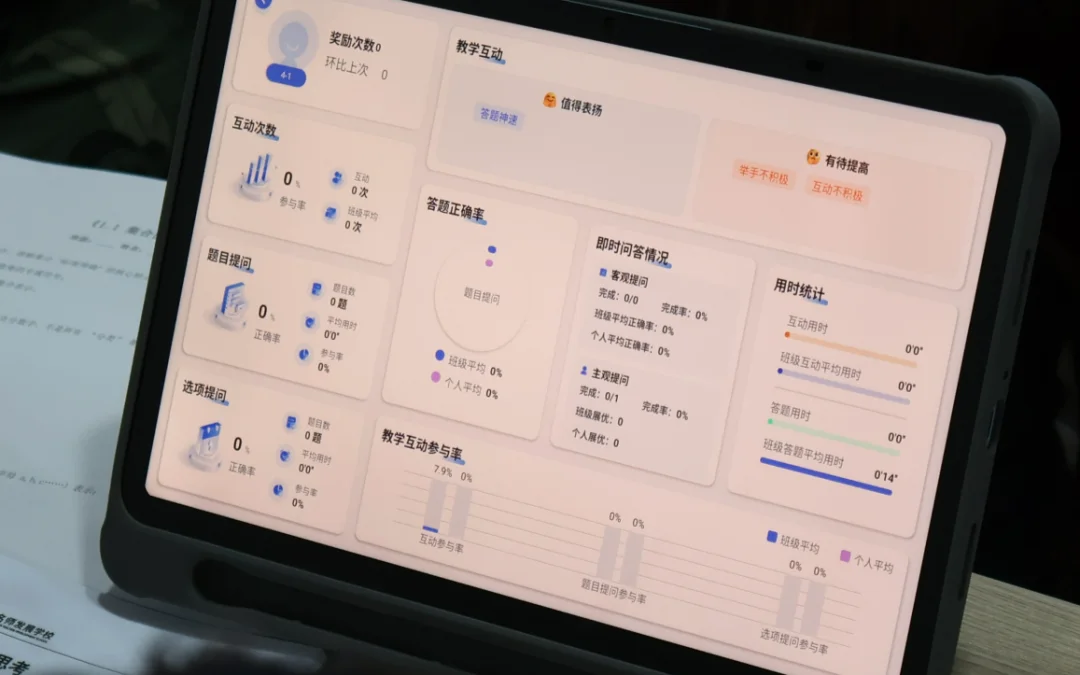
A tablet alone cannot improve learning.
The value comes from how learning evidence is collected, interpreted, and transformed into better teaching decisions.
For example, preparation activities may show that most students understand basic concepts but struggle with one particular idea.
Instead of reviewing everything, teachers can immediately address the misunderstanding while allowing students who already understand the material to move toward more challenging tasks.
This creates more efficient learning while respecting the different needs of every learner.
In other words, personalized learning technology is not about replacing one lesson with thirty different lessons.
It is about helping teachers make better instructional decisions based on reliable evidence.
Supporting Every Student, Not Only the Most Active Ones
Traditional classrooms naturally highlight confident students.
They answer questions.
Lead discussions.
Volunteer frequently.
Meanwhile, quieter students may remain unnoticed, even though they are thinking carefully or facing learning challenges.
One advantage of student-centered learning supported by AI is that every learner leaves traces of their learning journey.
Preparation activities, classroom participation, formative assessments, collaborative work, and reflective tasks all contribute evidence that helps teachers understand student progress more completely.
Instead of focusing only on the students who speak the loudest, teachers gain opportunities to support every learner.
For parents, this creates greater confidence that their children are being understood as individuals rather than simply becoming one member of a large class.
Preparing Students for a Changing World
Education is changing because society is changing.
Information is no longer difficult to find.
Artificial intelligence can generate explanations, summarize knowledge, translate languages, and answer factual questions within seconds.
If information is becoming easier to access, schools must focus increasingly on what technology cannot easily replace.
Students need to learn how to think critically.
How to evaluate information.
How to ask meaningful questions.
How to collaborate with others.
How to communicate ideas clearly.
How to continue learning throughout their lives.
These abilities cannot be developed through memorization alone.
They require rich learning experiences, thoughtful guidance, and opportunities for reflection.
This is why many educators see AI in the classroom not as the destination, but as a tool for creating deeper learning experiences that prepare students for an uncertain future.
What This Means for Families Planning to Study in China
For international families exploring opportunities to study in China, academic quality remains important.
However, families increasingly ask broader questions.
Will my child receive individual attention?
Will teachers understand their learning needs?
Will technology support learning in meaningful ways?
Will the school prepare students for a rapidly changing world?
These questions reflect a growing understanding that educational quality is about much more than examination results.
Schools that successfully combine experienced teachers, innovative teaching approaches, and thoughtfully implemented technology are often better positioned to help students develop both academically and personally.
Families interested in learning more about Hailiang International School’s educational philosophy can explore the About HIS page on the school’s website. Those who would like to understand the wider student experience can also visit the Campus Life section to see how academic learning, extracurricular activities, sports, arts, and student wellbeing are integrated into everyday school life.
Technology Should Strengthen Human Relationships
Perhaps the greatest lesson from AI-supported classrooms is surprisingly simple.
Technology works best when it strengthens human relationships rather than replacing them.
Teachers gain more time for meaningful interaction.
Students receive more timely support.
Parents gain a clearer understanding of learning progress.
Schools make better decisions based on evidence instead of assumptions.
When technology quietly supports these relationships, it becomes part of excellent education rather than the focus of attention.
The tablet is no longer the story.
The AI is no longer the story.
The student becomes the story again.
That may be the most important transformation of all.
Frequently Asked Questions
What is an AI in a classroom environment?
An AI in a classroom environment uses artificial intelligence to support teaching and learning before, during, and after lessons. Instead of simply automating tasks, AI helps teachers understand student learning, personalize instruction, and improve classroom engagement.
How does AI improve student learning?
AI helps teachers identify learning needs earlier, provide more targeted support, and create opportunities for student-centered learning through data-informed teaching and adaptive learning activities.
Does AI replace teachers?
No. AI supports teachers by reducing repetitive tasks and providing learning insights. Teachers remain essential for guiding discussion, building relationships, encouraging critical thinking, and supporting students’ personal development.
Why is personalized learning important?
Personalized learning technology helps educators understand that students learn in different ways and at different speeds. This allows teachers to provide more appropriate learning support while encouraging every student to develop their own strengths.
Why are more schools in China using AI?
Many schools are adopting education technology in China to improve learning experiences, strengthen classroom interaction, support individualized instruction, and better prepare students for future academic and professional challenges.
Final Thoughts
The conversation about artificial intelligence in education is often framed around technology.
The more important conversation is about learning.
The most successful schools are unlikely to be those with the greatest number of digital devices.
Instead, they will be the schools that know how to combine excellent teachers, thoughtful educational design, meaningful learning data, and appropriate technology into one coherent learning experience.
As more international families choose to study in China, they are not simply looking for modern classrooms.
They are looking for schools that understand how students learn, how teachers grow, and how innovation can support every child’s future.
When technology serves those goals, AI becomes more than a tool.
It becomes part of an educational environment where every learner has greater opportunities to succeed.